The Midgard Heroic Battlespage on the website has undergone some reorganisation this week, collecting all of the videos, Force lists etc and placing them onto their own pages. Hopefully this has reduced the clutter a bit! It’s not quite finished yet and I have plans to streamline the rest of the site, but it’s a start.
The biggest news of the week, however, was the announcement that Midgard had won Best New Wargames Rules 2024 in the Wargames Illustrated Awards! Delighted and slightly stunned, especially looking at some of the competition! Thanks to everyone who voted and has supported the game.
After a lot of running about behind the scenes, details are now up for the Midgard Moot event at Boards And Swords Hobbies (Derby, UK) on Saturday 26th April 2025. Come and play some Midgard in a variety of settings, hosted games and themed campaigns. We have games set in Ancient Germania, Middle-earth, Harfleur 14515 and many others. Click here for all the details.
Please note that bookings don’t open until Sun 19th Jan.
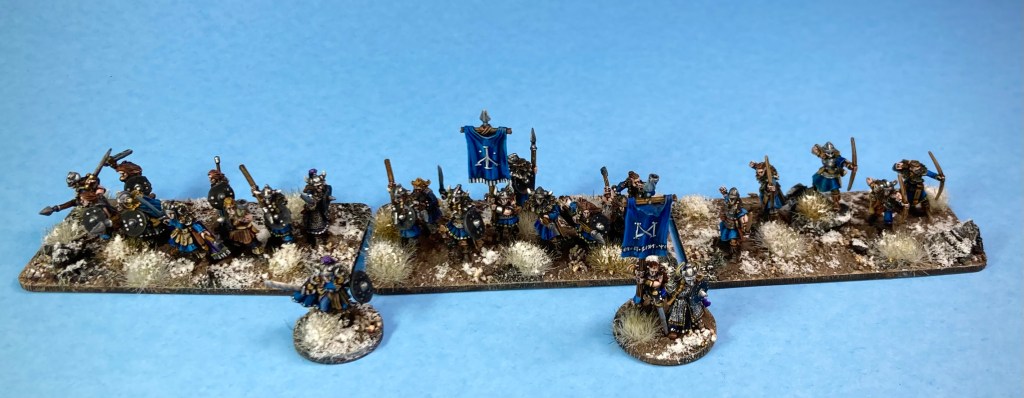
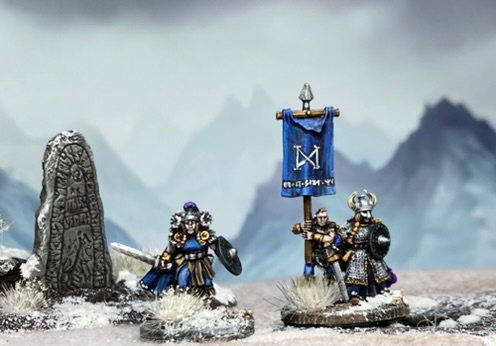
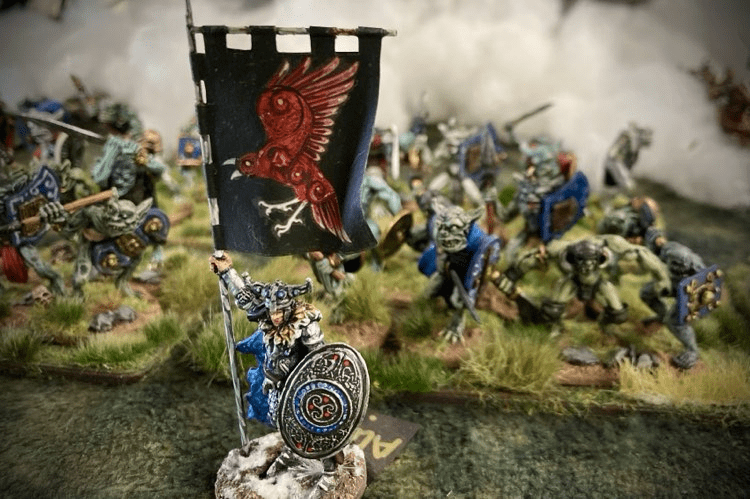
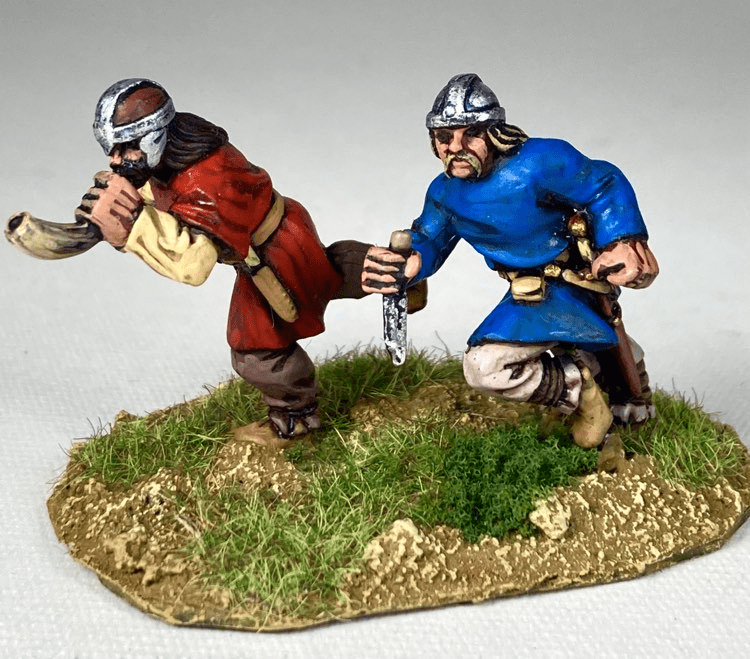
Hornblower 15mm miniatures; painting and scenery by me; background from Jon Hodgson Backdrops (A3 Winter Book)
These marvellous little minis came to my attention last year when Oz sculptor Mathias started posting works in progress on his Instagram account (@macefaceminiatures). 15mm isn’t my main scale, but I’d enjoyed putting together some Wiglaf and Forged in Battle minis for a recent project and was willing to have a look. Nick at Northstar passed on some samples which, I regret to say, sat on the painting table half finished as I got distracted with real life and other such stuff.
The Christmas holidays were a chance to get these finished off and based, and I’m glad I did. The sculpts have more than a nod of Copplestone about them and match well with his work on the Barbarica and Wiglaf ranges.
I confess that I was slightly intimidated by Steve Dean’s superb paint jobs on these exact minis and decided to focus on what I do, which is putting together units to get onto the gaming table. I opted to go for something along the lines of a ‘slap chop’ approach – using Contrasts/ Speedpaints to add colour over a pre-shaded base layer.
After a quick clean up, mine were sprayed black and then dry-brushed with mid grey and white acrylics to provide a graduated base. This didn’t work quite as well as when I’ve used it on 28mm minis, as some areas (especially faces) were so small that they didn’t pick up much of the grey/ white paint. This resulted in a bit of fixing up later on, where I did some manual highlights onto these areas with traditional acrylics.
I failed to take step by step photos, but the sequence was:
Black undercoat followed by grey and white dry brush.
‘Colouring in’ main areas with GW Contrasts/ Army Painter Sppedpaints: Skin (AP Crusader Skin); Hair (GW Nazdreg Yellow); Leather/ Boots (GW Snakebite Leather, GW Gore Grunta Fur, GW Gagarak’s Sewer); Horns (GW Skeleton Horde); Spears/ Bows (GW Snakebite Leather); Helmets/ Armour/ Blades (AP Broadsword Silver).
Clothing – blue was the theme here! (All GW Contrasts: I used a whole mixture of Talassar Blue, Ultramarines Blue, Celestium Blue, Gryph Charger Grey, with a few leaders with Luxion Purple).
This was followed by some light dry brushing with Vallejo Iraqi Sand to bring up detail and touching up darker areas with various acrylics as described above. It wasn’t an exact science! Some clothing had trimmings painted on, and I highlighted and added some runic designs to the banners.
Shields were painted acrylic black – I wanted a contrast with the bold blue clothing.
Following a coat of spray varnish (Winsor and Newton Professional Matt), I added the metallic highlights. Army Painter Shining Silver was used to dot in rivets on the shields, as well as to highlight all the iron and steel. The few areas of bronze/ gold were done with my usual technique: Vallejo Brass base, wash of brown ink, highlight with Vallejo Gold.
I’m planning to use these for Midgard Heroic Battles; 80mm x 40mm bases worked very well indeed for my 15mm early medieval collection, and has become a common standard amongst 15mm players, so I went the same way with these.
The bases are 2mm round-cornered MDF from Warbases, with the heroes being based on a 20mm and 25mm circles. Frosty bases were the order of the day using Gamer’s Grass winter and beige tufts and some Woodland Scenics snow scatter.
This also gave me the excuse to use the new Winter Book from Jon Hodgson Backdrops for the photo shoot! These are the A3 versions which gave me more options on the wide shots. I’m absolutely thrilled with how good these are (though I need to raise my photography game this year!)
Having got these finished, I can now work on the next project, though I hear that some Shield Maiden cavalry are just around the corner, so there may be more to come very soon!
You can find the Hornblower 15mm range at Northstar, along with the Gamer’s Grass tufts.
Thank you all for following the ups and downs of Mogsymakes.net over the last 12 months. It’s been a huge year for me…Midgard Heroic Battles finally came out in November after five years of preparation and the response has been fantastic. I’ve also gone back to partial self-employment alongside my day job in order to support Midgard and my writing/creative work. There have been many enjoyable shows and unforgettable games en route – thank you for your company if you’ve been involved in any of these!
I’ve just been tidying up some loose ends during the Betwixtmas period and finally got my Second Punic Wars lists completed for Midgard. These are available for free download on the main Midgard Heroic Battles page along with all the other official lists so far. While there will probably be more of these in 2025, I shall be concentrating my writing energies on the campaign system and future supplements.
Nick of Medieval Wargamer has been continuing to enjoy the rules and filmed a battle report using his stunning Scottish – English Wars collection using one a forthcoming scenario from the campaign supplement, which you can watch here.
There’s been a decent amount of coverage of Midgard in the wargames press (some of it written by me) so it was a pleasure to get the latest Wargames Illustrated 445 with a very favourable independent write up from the team there focusing on what they enjoyed about the rules.
The Wargames Illustrated Awards poll runs until Jan 31st 2025 and Midgard has been nominated for Best New Rules, so please do put in a vote if you have enjoyed them.
Should you be in the area, I’ll be at Boards and Swords Hobbies (Derby, UK) with some of the play test team during the day on Saturday 4th January, running introductory games of Midgard from 10am. No need to book, just drop in.
Thank you for your support and a happy new year to you all!
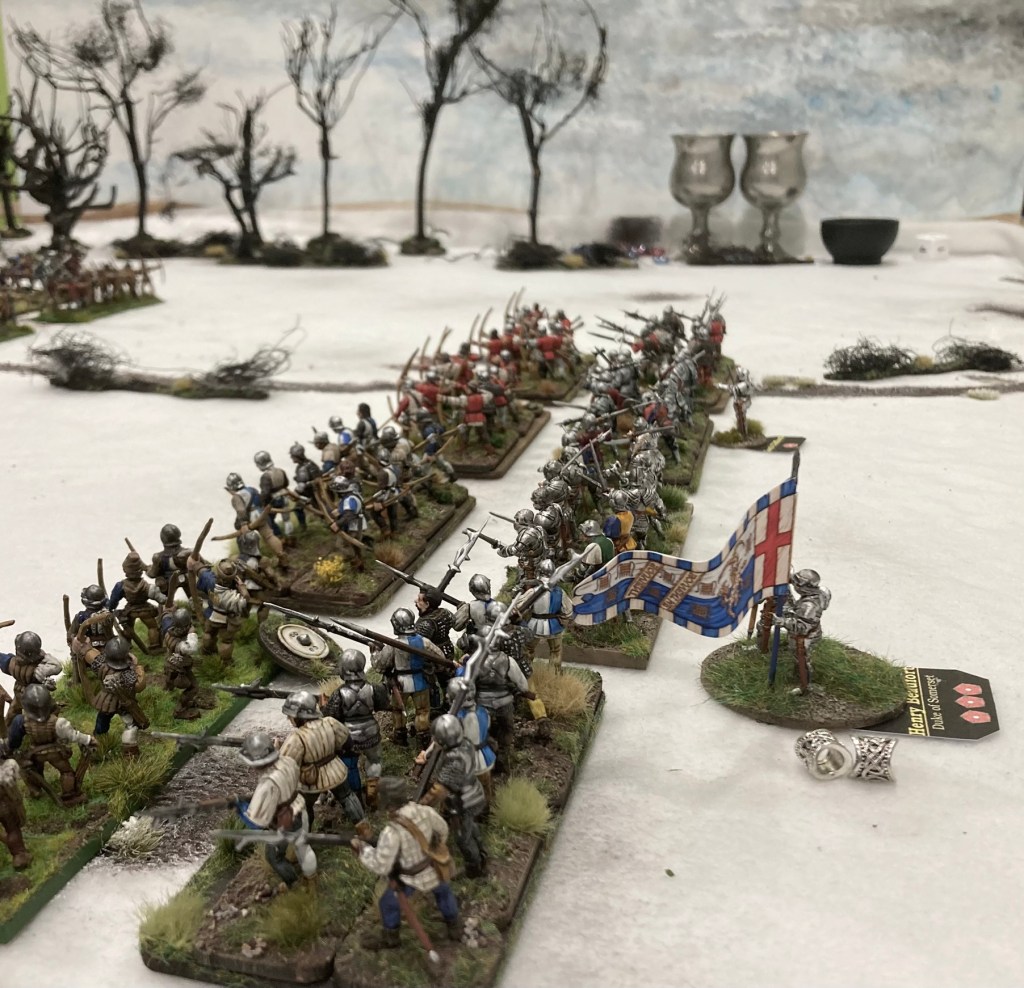
I seem to have played two games of Wars of the Roses using Midgard this week, commanding the Lancastrians on both occasions! The first was a Battle of Wakefield 1460 game, which you can read a full picture report with orders of battle here.
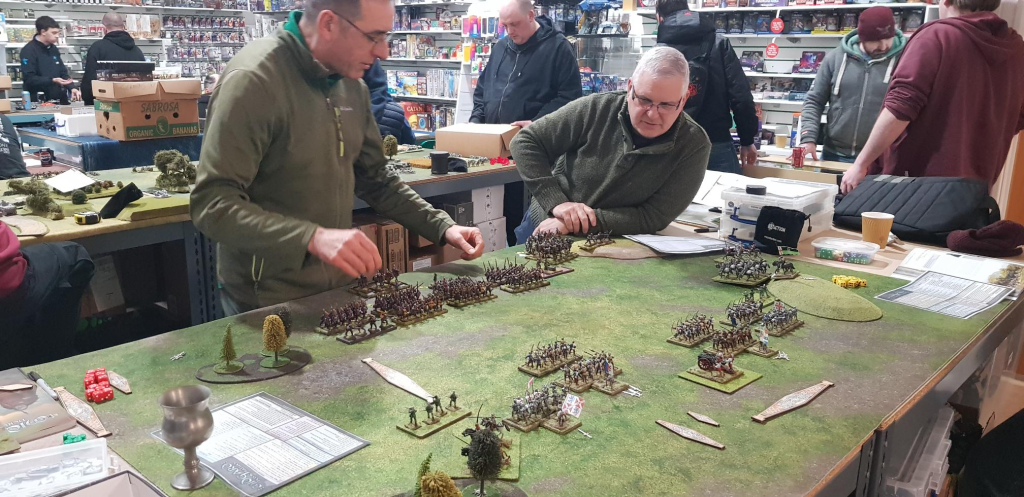
The other was a visit to Boards and Swords Hobbies in Derby, where I introduced some new players to the game and laid some plans for our first Midgard event, due to be held there on Saturday 26th April 2025. Ian from BASH has also persuaded me and some chums to run Midgard games on Saturday 4th January – just drop in if you’d like to try the rules.
Pic by Pete Harris at BASH
The Midgard Heroic Battles rulebook has been sent for a reprint, which is fab news less than a month after release.
Warbases have expanded their range of Midgard-related products with some custom raven dice and Killing Zone templates; thanks again chaps! (Please note that Warbases are now taking a well-earned break so you won’t be able to get these now till Jan 2025).
Lard Magazine 2024 has also made its appearance, being a PDF annual magazine from Too Fat Lardies. This year’s issue includes a scenario from John ‘What a Yorkshire Cowboy’ Savage based on the Fords of Isen from Middle-earth, as well as an article by myself on my thoughts for Midgard events.
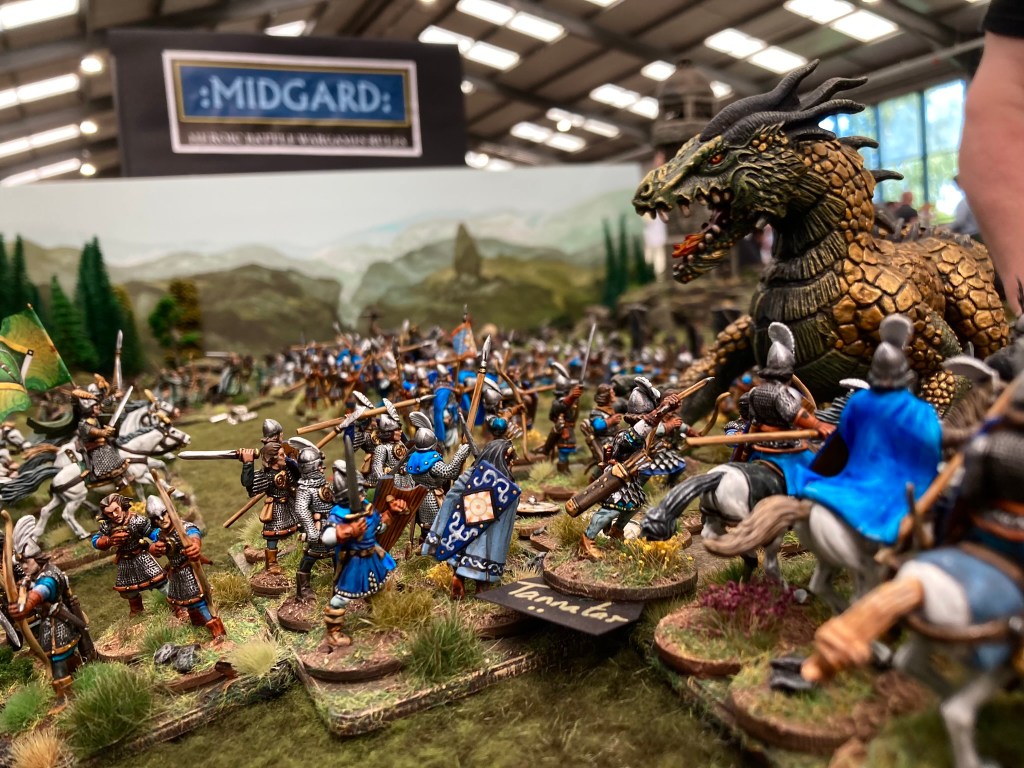
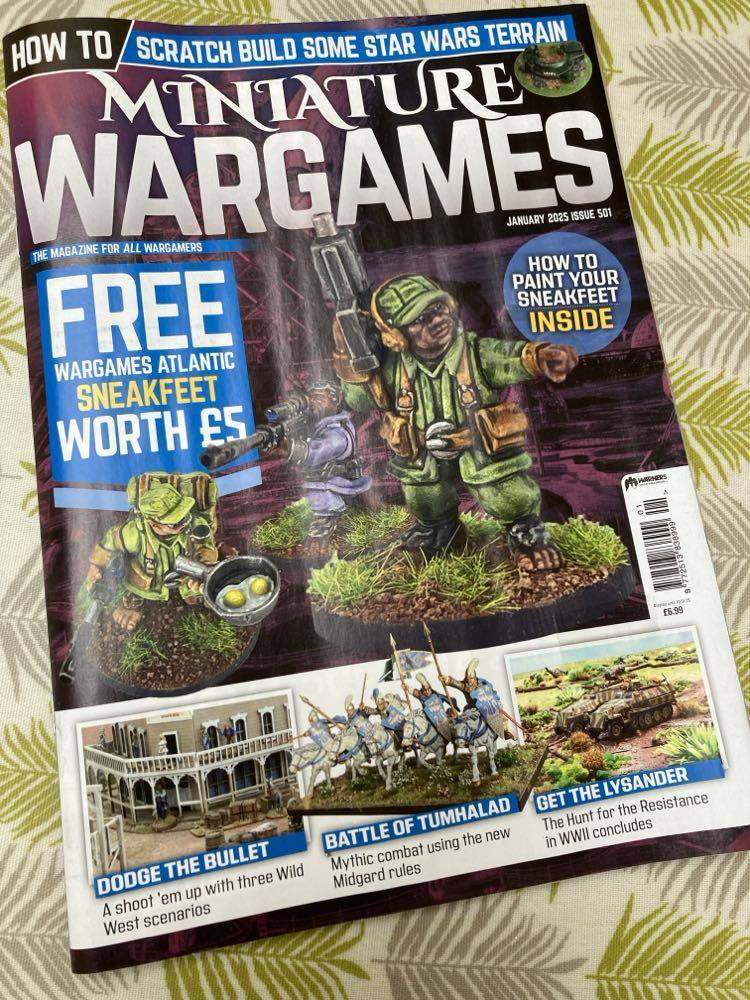
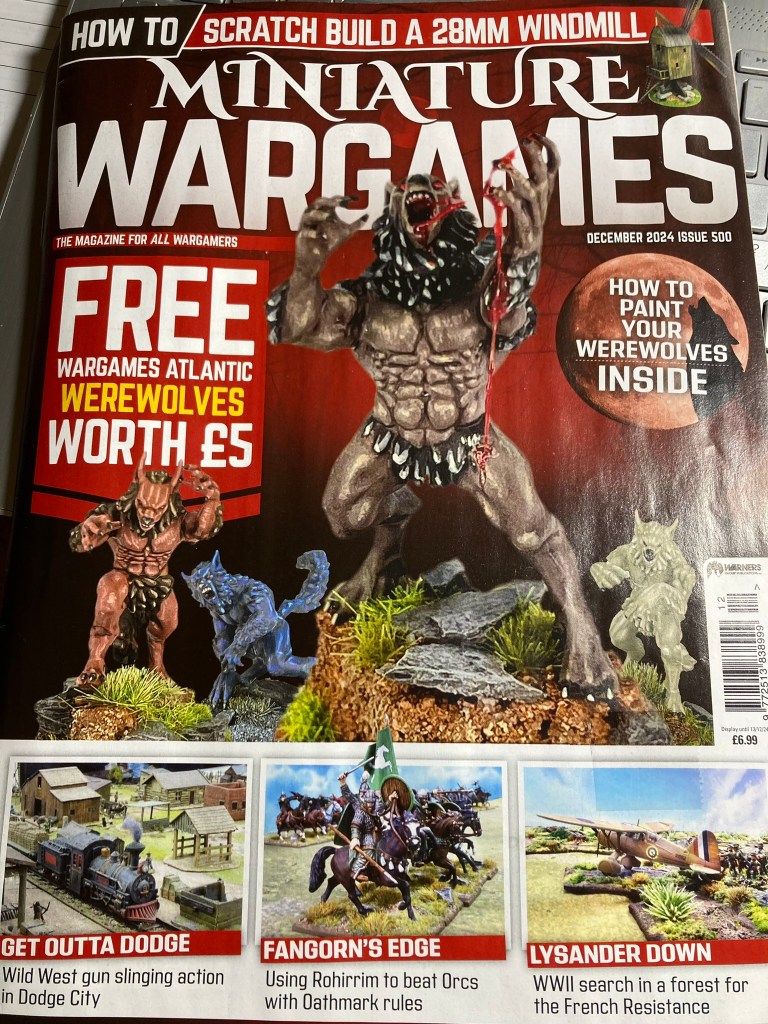
And finally, my article and scenario to play Tolkien’s The Battle of Tumhalad has made its appearance in Minature Wargames magazine 501 this week.
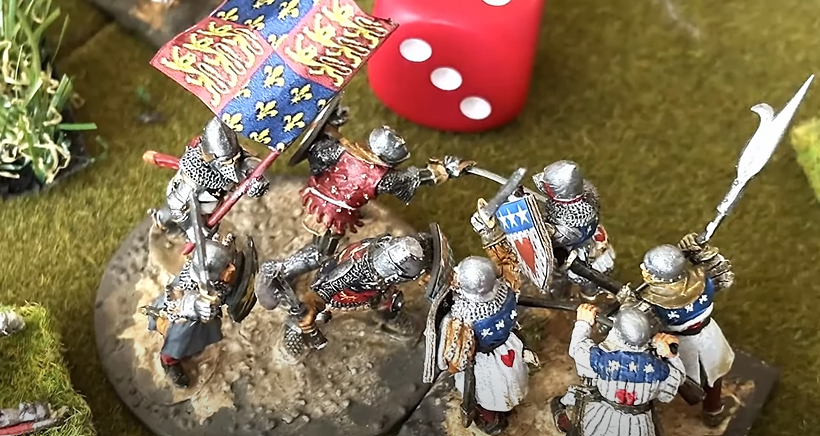
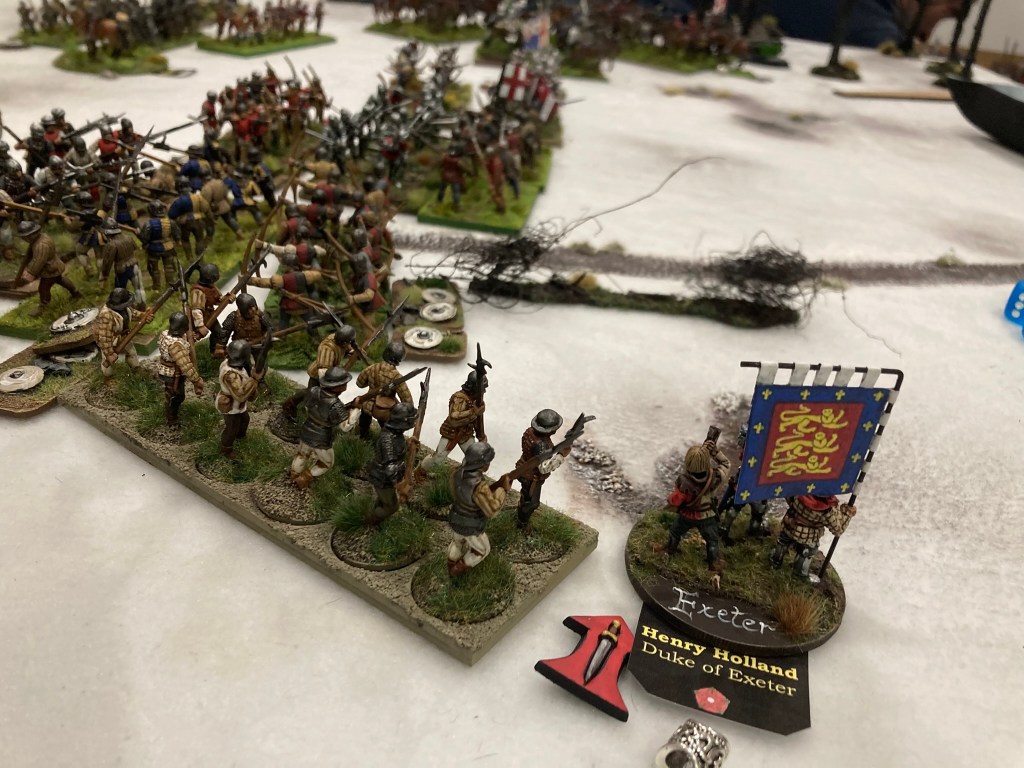
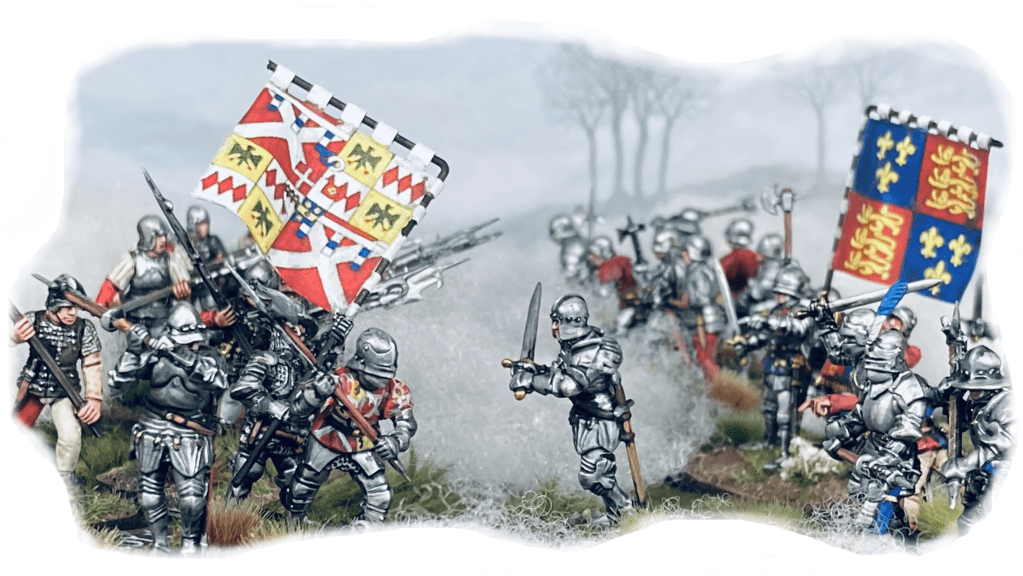
HYW Perry Miniatures, all painted by Paul Scrivens-Smith
Nikolas of the Medieval Wargamer YouTube channel and I put our heads together and created a couple of Hundred Years’ War lists suitable for the Agincourt campaign of 1415, along with my designer’s notes (on why the French have such limited Heroes! and other stuff). These are free to download from the main Midgard Heroic Battles page on my site, along with the previous lists and a Play Sheet for Midgard with page numbers thoughtfully added by Andy DrBeard.
Not only that, but Nick also recorded a play through game of Midgard set during the Baron’s War and has recorded an interview with me that will be heading for a future video release. If you’re not sick of hearing my voice, Henry Hyde has also made his latest Battlechat Podcast available to all this week, in which I talk about gaming, Midgard and growing up down the road from a castle, which explains a lot…
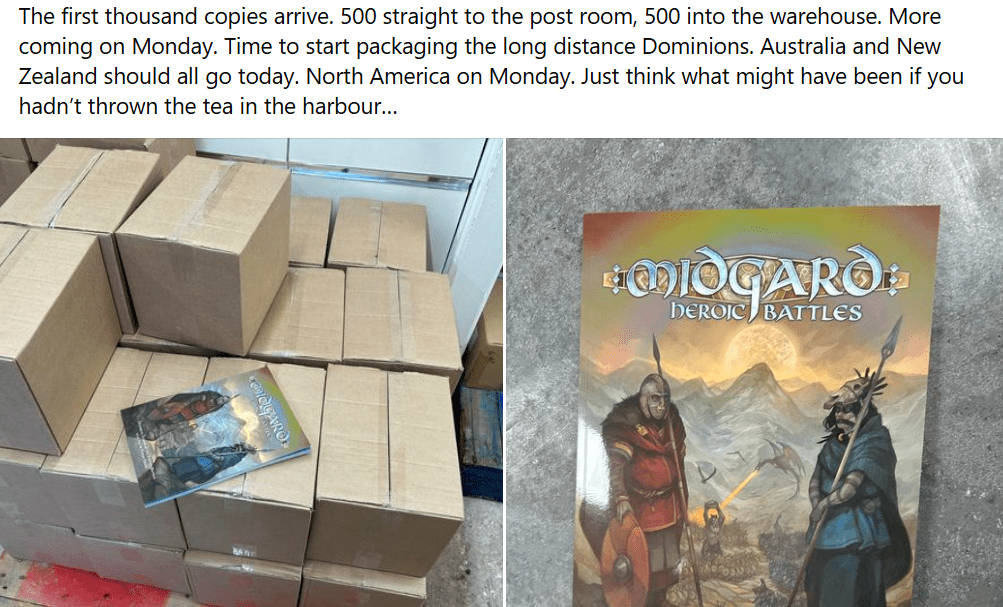
A box of hard copies of Midgard has arrived at Shieldwall Miniatures in the USA. Jeff of Shieldwall is also 3D printing the official measuring sticks and rulers under licence, so check them out if you’re in the USA.
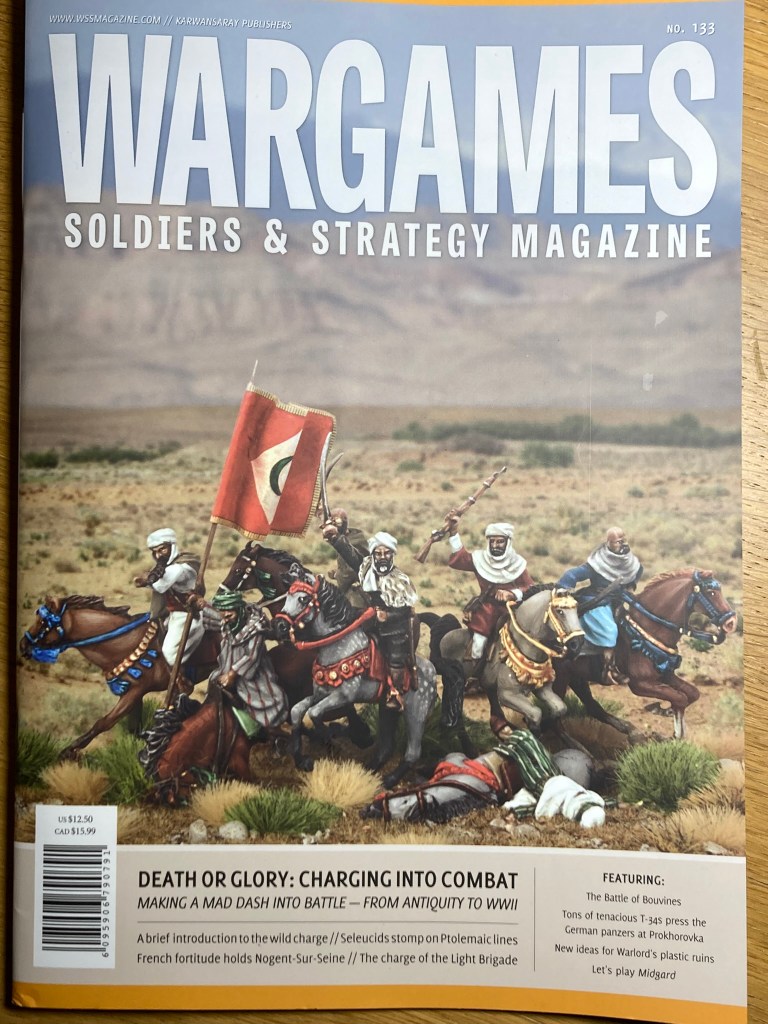
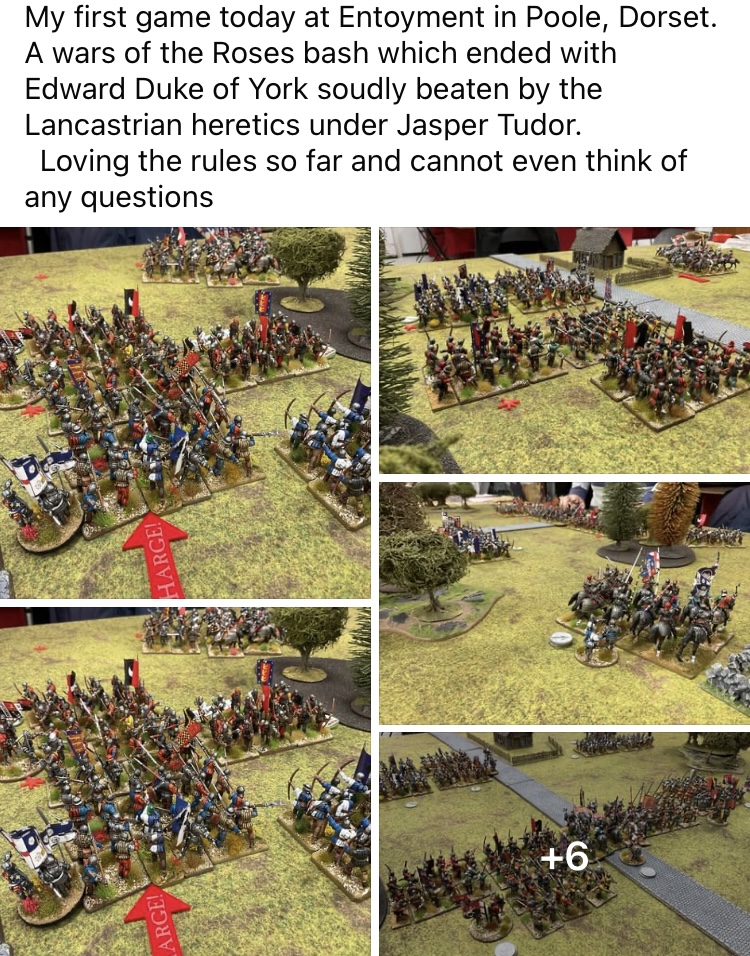
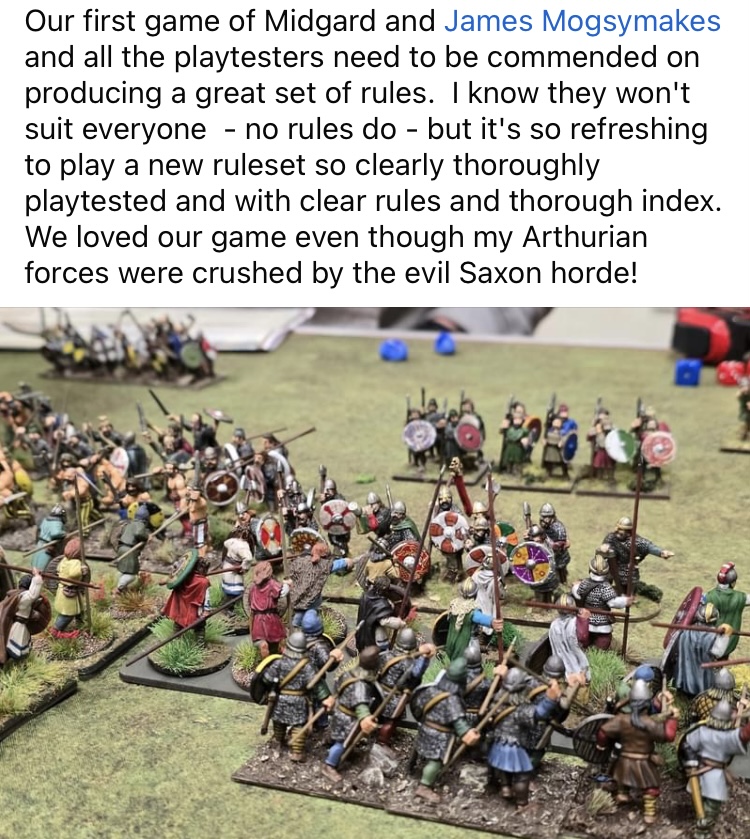
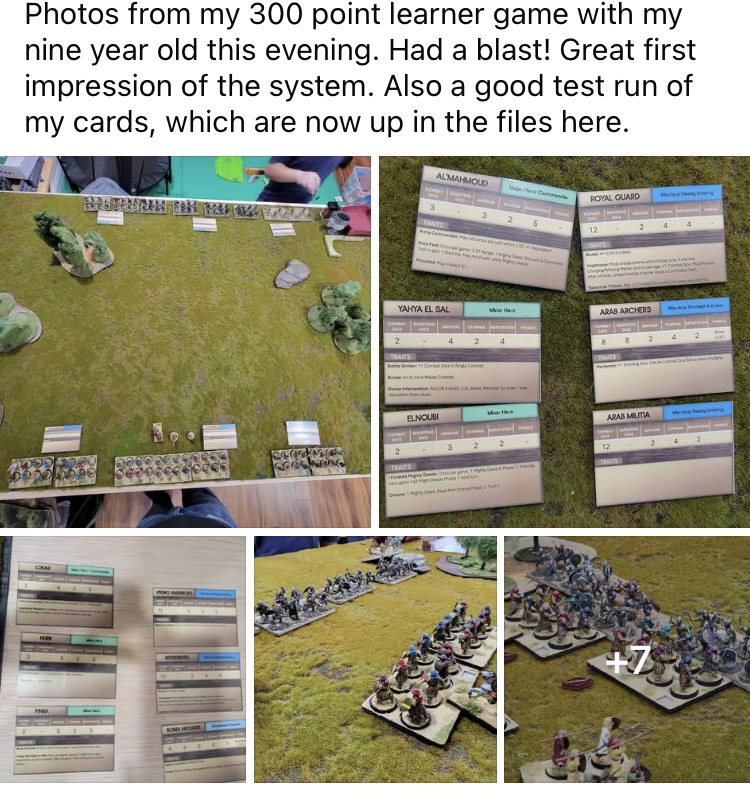
People still seem to be enjoying the game out there! The latest WSS magazine carries a nice review, and below is a selection of posts from social media this week.
Plans are afoot for a Midgard event in the UK next year with a mixture of themed campaigns and hosted games. I’ll announce the details as soon as I can.
Last but not least this week, I have a new logo for Mogsymakes. Based on my ape-like sketches, Asun from Wargames Illustrated kindly put this together for me. I’m planning to redesign parts of the website over the next month, so watch out for this putting in an appearance.
Hi everyone, it’s been a bit of a wild week with Midgard Heroic Battles finally being released a mere six days ago. Since then, everyone’s been getting their toys on the table and it’s been awesome to see so many games being played with lots of positive feedback. Here’s a selection:
Magazine coverage of Midgard has also started, with articles about gaming Homer’s Iliad with Midgard in Wargames Illustrated 444 and a one-page discussion of what inspired me to write the rules in the back of Miniature Wargames 500.
The Midgard Heroic Battles Official Facebook Group has been a hive of activity, with players posting their own Force lists to the site. I have posted four additional ‘official’ lists as well, covering the Wars of the Roses and the Ancient British and Early Imperial Roman Forces that we used in playtesting. These are available both on Facebook and on myMidgard Heroic Battles page for free download, as is a MS Word Excel Force Creator document.
The official STLs to 3D print your own Midgard measuring sticks and tokens are now also available as a paid download with both personal and commercial use covered. Full details of where to do this are again on the Midgard Heroic Battles page.
Finally, if this wasn’t enough and you’re not bored of the sound of my voice, there are more podcasts to listen to while you’re painting. The Too Fat Lardies Oddcast came out first, in which I was grilled on John Keegan and other topics linked to Midgard such as the national goblet shortage before being unceremoniously chucked out of a tower window in the ‘defenestration of Lard’ section of the show! (Sidney Roundwood is now off the Christmas card list!)
This was followed up by an appearance on Henry Hyde’sBattlechatwhere I was treated much more gently but we still had a great conversation about games design and Midgard (of course). (Note that this is initially a patron only chat, it’ll be free to listen to at a later date).
Lots more happening over the next few days, but I’m going to take a break now. Cheers!
Well, it’s finally out there. Huge thanks to all of you who pre-ordered the game – all hard copies have now been posted and PDFs have been sent during the day. If you’re in Canada (in the midst of the postal strike), I’m thinking of you guys now, but hopefully the PDFs will help!
I’ve updated the Midgard Heroic Battles page on the website with the links where you can buy the book, the PDF, the tokens and the STLs for 3D printing, so check that out if you want any of those. The MS Excel spreadsheet Force Creator and a sample set of Wars of the Roses Force lists are also on there as well.
Massive thanks to everyone who worked on the book, including Jon Hodgson and Paul Bourne of Handiwork Games who produced the distinctive art, logos and layout; Pete Jenkins for his superb and patient camera-work; and the playtest gang around the world.
And, in particular, thank you to all of you who have bought and supported the rules. Cheers!
It’s been another busy week here as the Too Fat Lardies/ Reisswitz Press machine (OK, Richard Clarke and his dog) gets into gear for the release of the rules on November 18th. Here’s a little note from Richard about the advanced orders:
I’ve run three games of Midgard in the last five days testing new scenarios and am having the weekend off chucking dice, especially as my family would like to see me sometime. However it was a fabulous experience demoing it for Rick Priestley, which you can read all about here.
Richard finished editing and put up a couple of videos with a more fantasy bent, one about Force Creation and the other, the start of a battle between Trolls and Elves based on Poul Anderson’s classic novel The Broken Sword. All these links are on the main Midgard Heroic Battles page of the site along with ordering details (there’s still time to get a pre-order in, which means that you get the PDF for free alongside a hard copy, and will likely get them before the shops).
The Midgard Heroic Battles Official Group on Facebook has grown to over 1400 members during the week as well and there’s a lot of frothing and discussion going on about what people are going to be using the rules for. Join us there if you’re not allergic to Facebook!
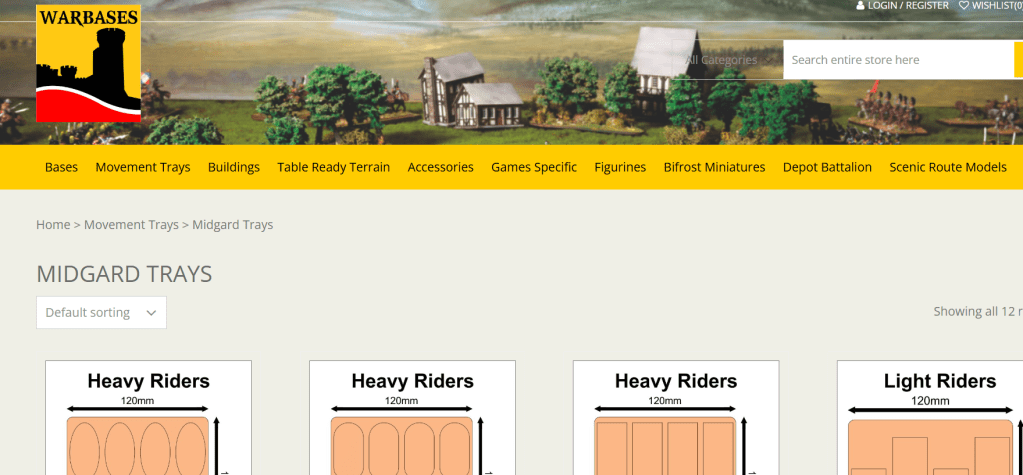
Glenn at Warbases has been working hard on putting together a whole range of MDF movement trays suitable for Midgard, which I’ve checked over and approved. Midgard is different to other rules sets in that the basing sizes are highly flexible, but Glenn has done a fine job on making a range that will suit the standard 12cm Spear Throw/ Unit base frontage for the game.
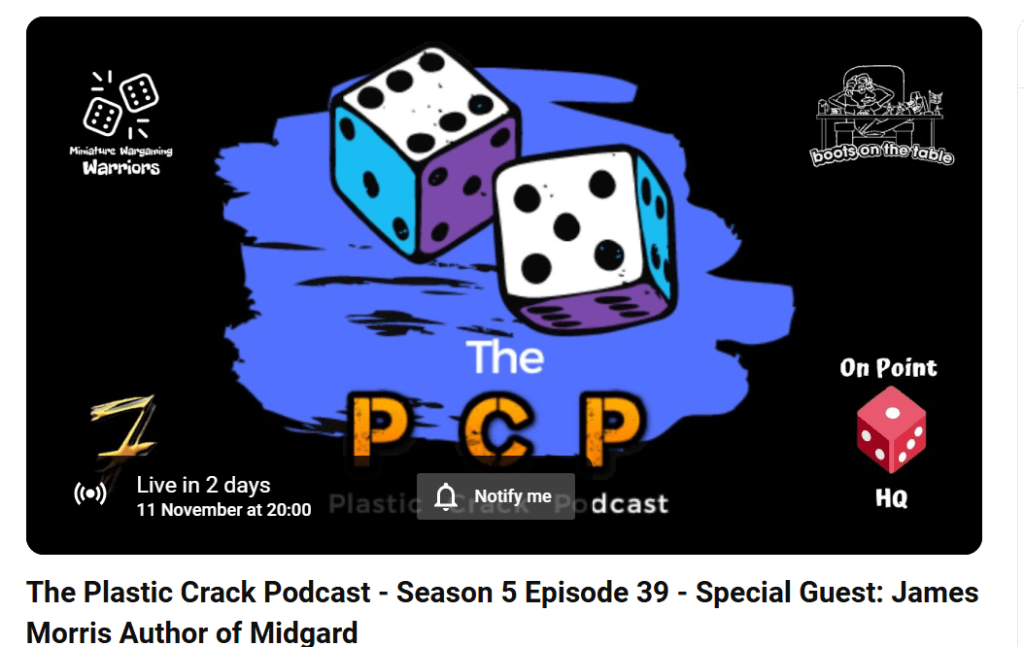
And finally, I’m very excited to be appearing on the Plastic Crack Podcast on Monday at 8pm GMT. This is a 2-hour video podcast on YouTube that’ll be live at 8pm and available to watch as a recording afterwards. I’ll be answering questions and possibly showing some more of my early wargaming photos – let’s see if I can find one with my eighties haircut! You can set a reminder to watch the podcast using the link above.
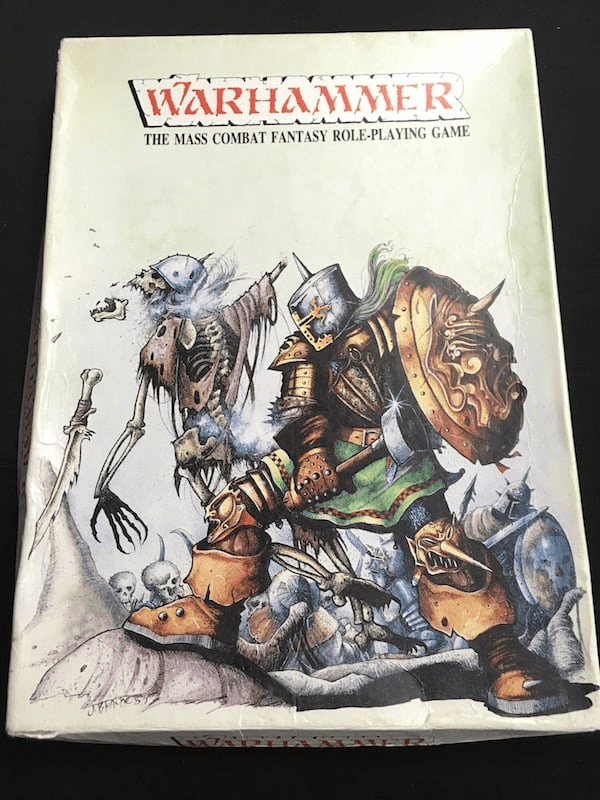
I was a bit young, only 11, but this game looked pretty good (we’d seen the adverts in White Dwarf), and I think I received it for Christmas. There wasn’t a wargames club anywhere in the town where I lived, so I got together a small group of like-minded friends and we did the best we could on my parents’ table tennis table (which, at least, was green). Having played D & D, we saw all the figures as individuals rather than units, and anyway, the initial tagline of this game was ‘the mass combat fantasy roleplaying game’, so it was all a bit confusing. And brilliant fun.
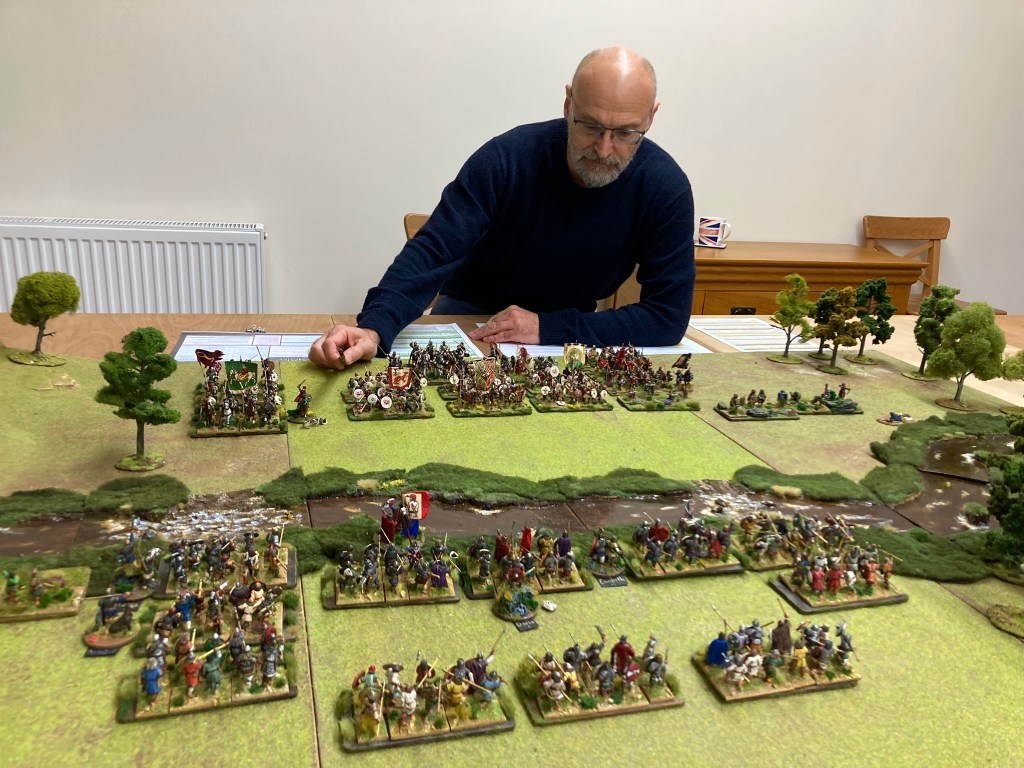
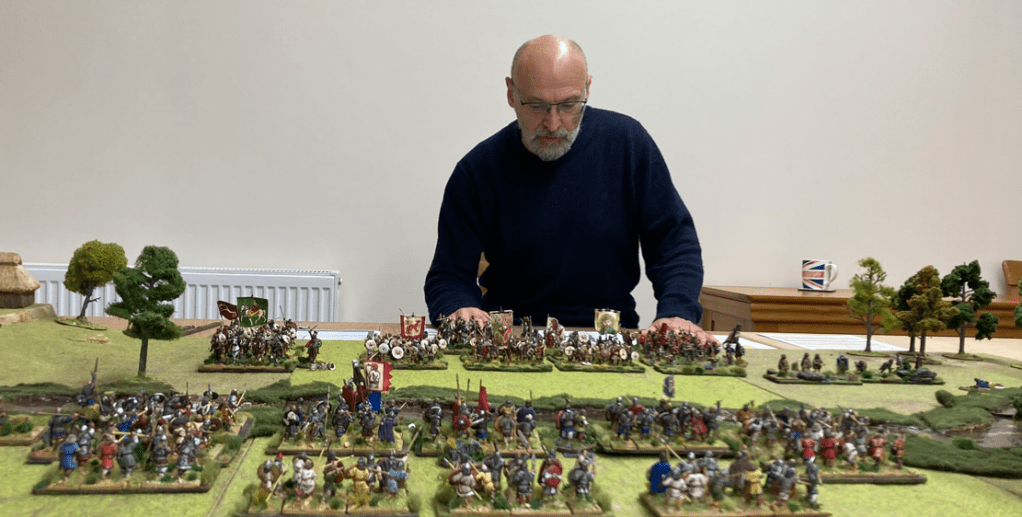
Photos from my early gaming career are somewhat rare, perhaps fortunately in the case of eighties’ haircuts! This shot (from around 1988 I think) shows me and my fashionable C&A jumper adjudicating a melee in one of our Warhammer battles. The scenery is basically a table tennis table with some rocks and sand on it, but I was very proud of my balsa wood stockade, and the Citadel cardboard buildings designed by Dave Andres helped to raise the bar
Fast forward forty-ish years, and I’m sat at a gaming table with one of the original authors of Warhammer, about to demonstrate my own ‘mass battle’ game to him. I’m not sure that twelve-year old me would have believed it, but there you go.
I got to know Rick during the heyday of Warhammer Ancient Battles, the historical game produced through Games Workshop in the early noughties.
WAB Age of Arthur, cover art by Jon Hodgson, 2006
I was fortunate enough to write two supplements for WAB (El Cid and Age of Arthur, the latter with Steve Jones) which Rick maintained an involvement in before the project’s end.
Mount Erebor: a popular meeting place for old chums and rivals
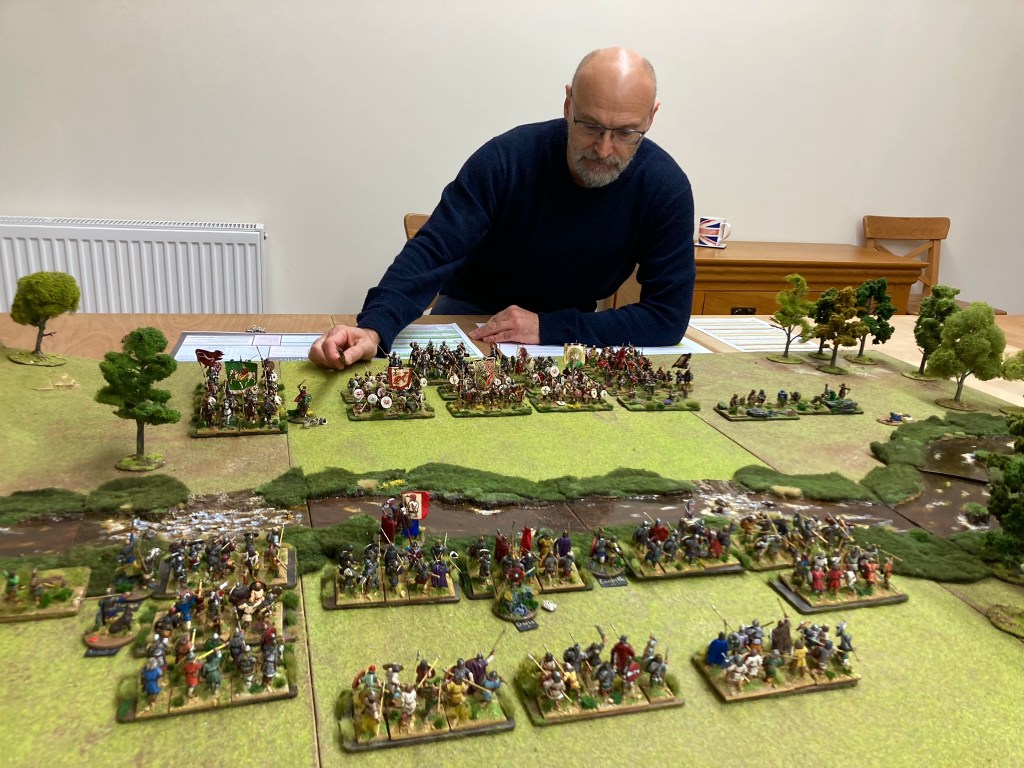
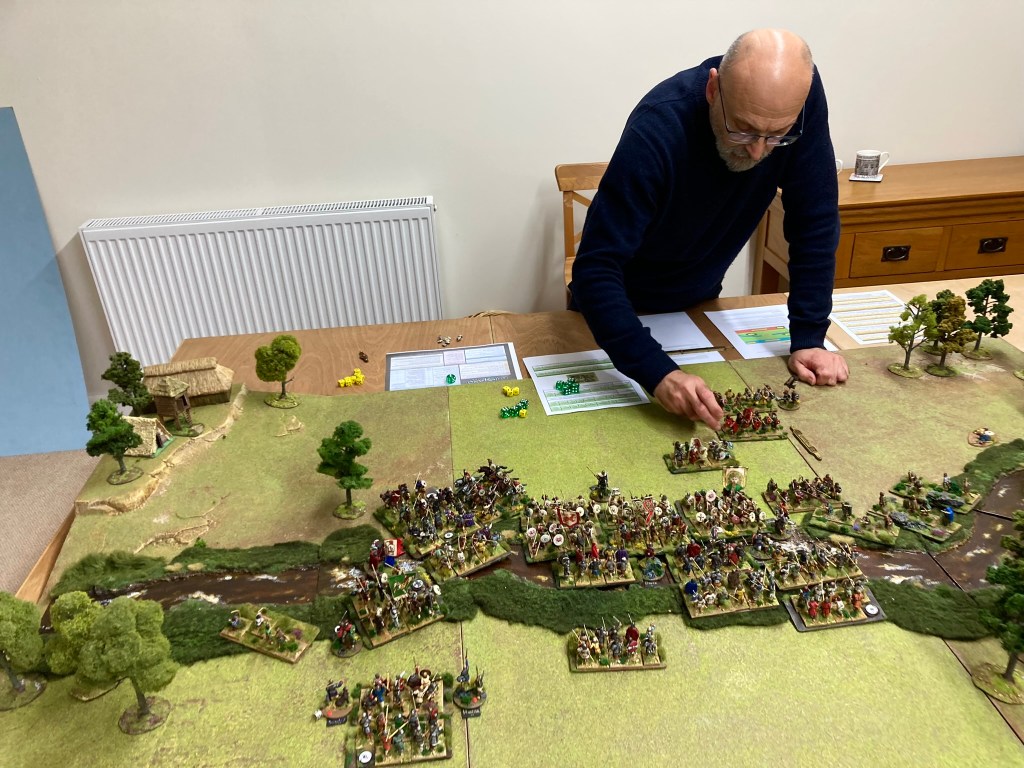
Having run into Rick behind Mount Erebor at a recent show, he kindly expressed an interest in Midgard Heroic Battles, so I agreed to pop over to demonstrate the game at some point in the future. Arthurian Britain was picked as the theme, we agreed a date, and it was game on. Having survived a savaging (well, licking) from his ferocious cockapoo as I entered his house, we carried the boxes through and set up on a portion of the mighty wargames table.
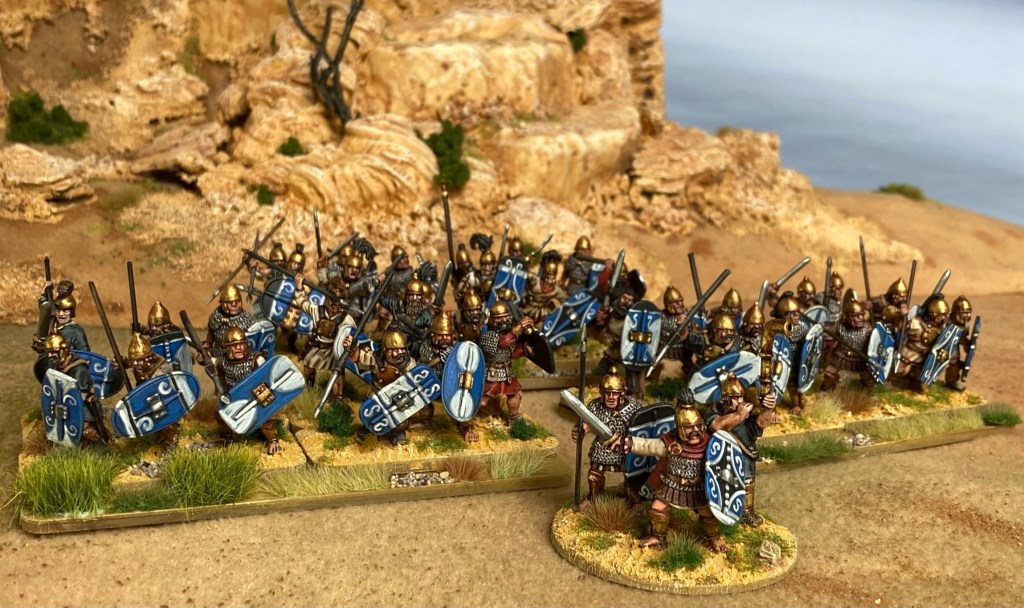
I brought a couple of Forces over, the same ones that have been appearing in our official videos with Richard Clarke – Artos and the Britons and Aelle’s Saxon Raiders. These were slightly different versions of the 300-400 point sample lists that appear in the rulebook.
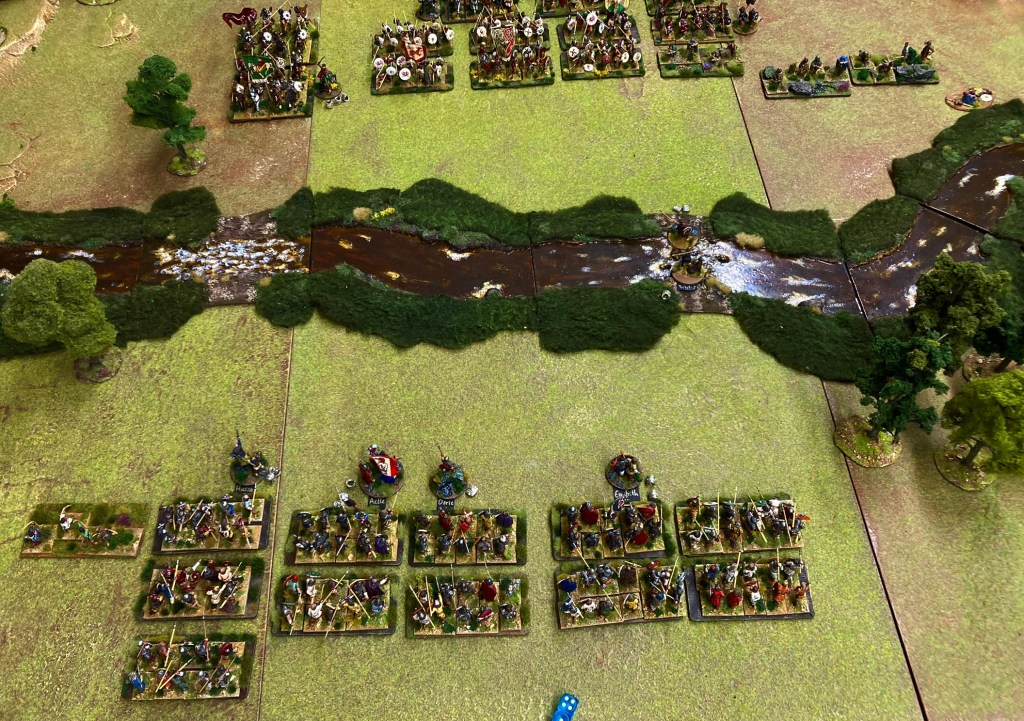
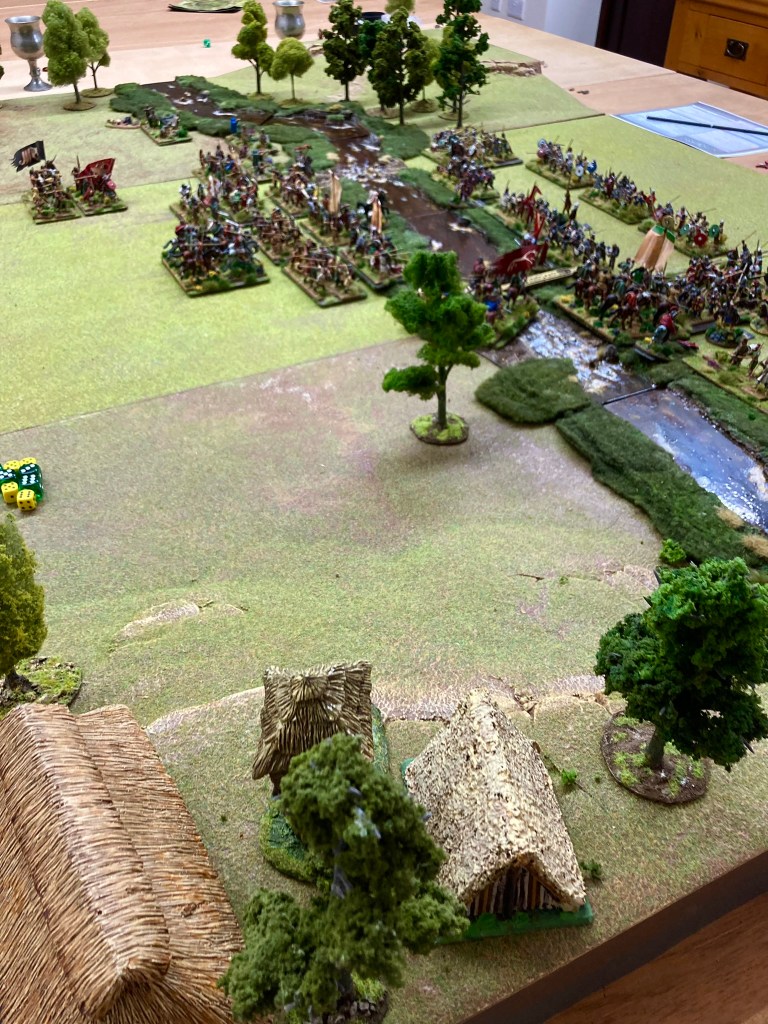
The scenario was to be The Red Ford – a new one currently undergoing play testing that is likely to appear in a future Midgard supplement. Rick had set out some of his terrain tiles in a 6 x 4′, to which I added my ‘drop on’ river terrain piece. The lush green banks of mine didn’t quite fit the traditional green flock of Rick’s boards, but so what?
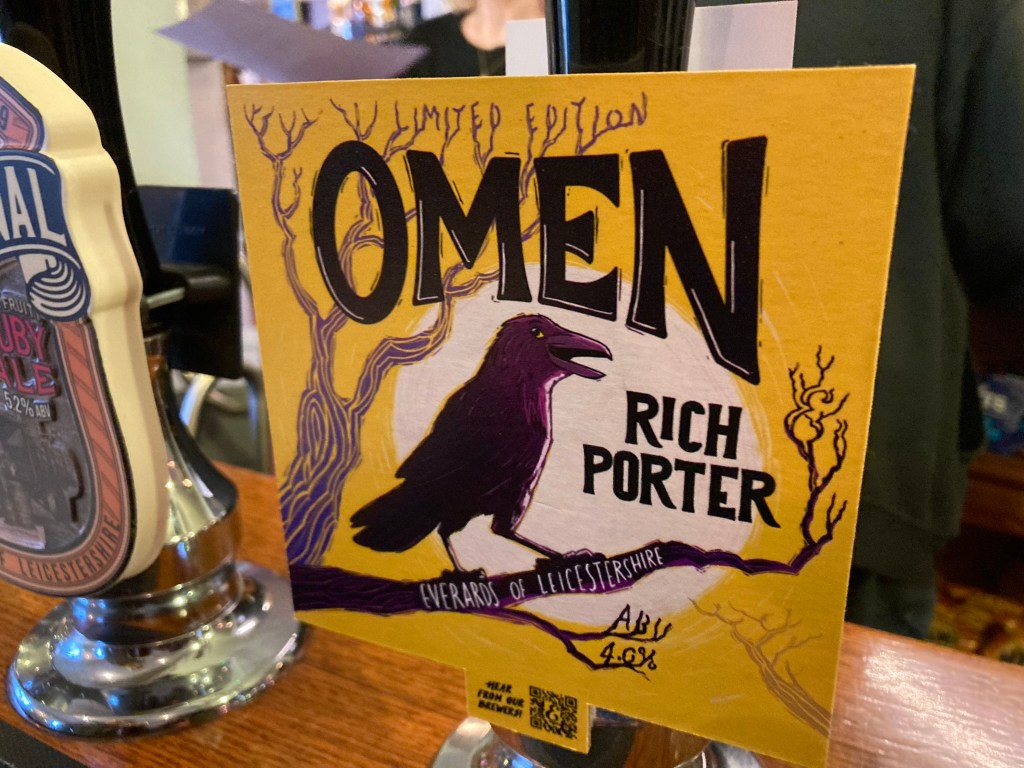
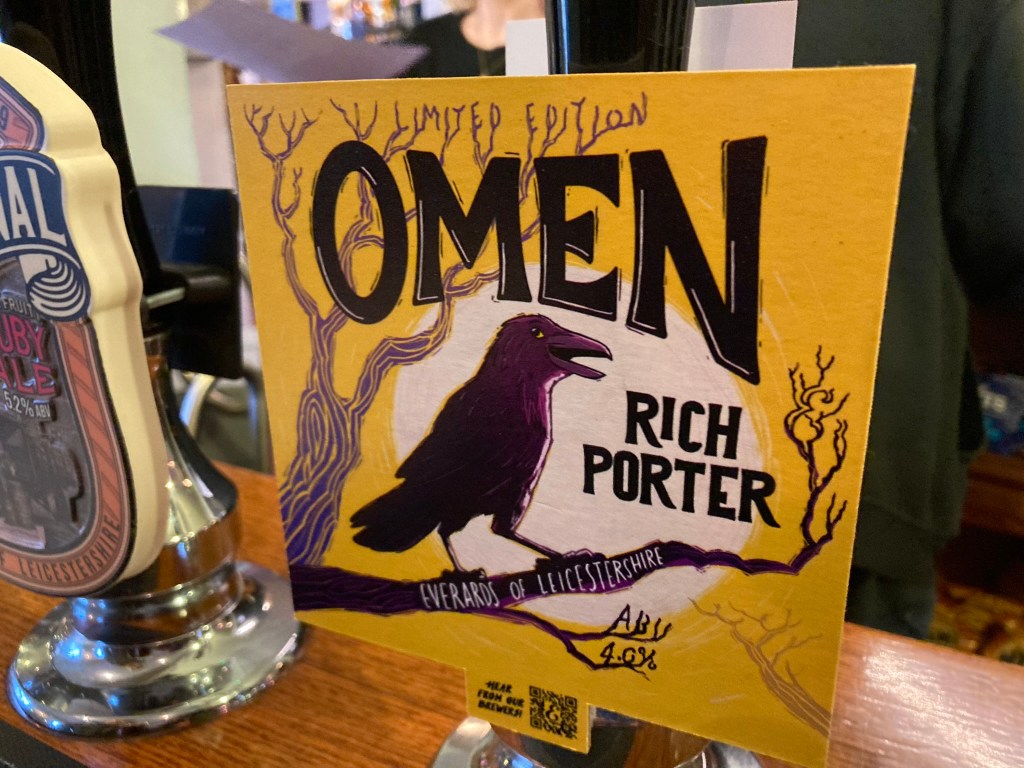
We both had soothsayers in our ranks with the Omens Trait and elected to spend a Mighty Deed each to gut a goat (or similar oppressed small animal) and read its entrails to foretell the future. We each rolled a 5, with our prophets each reporting that it was a good day to fight, my lord, and that surely we would win the victory! (Someone must have been fibbing, but we both added two Reputation tokens to our goblets). We were therefore much amused to find this porter on in the pub at lunchtime!
It’s an omen! Rick felt obliged to sample a glass at lunchtime
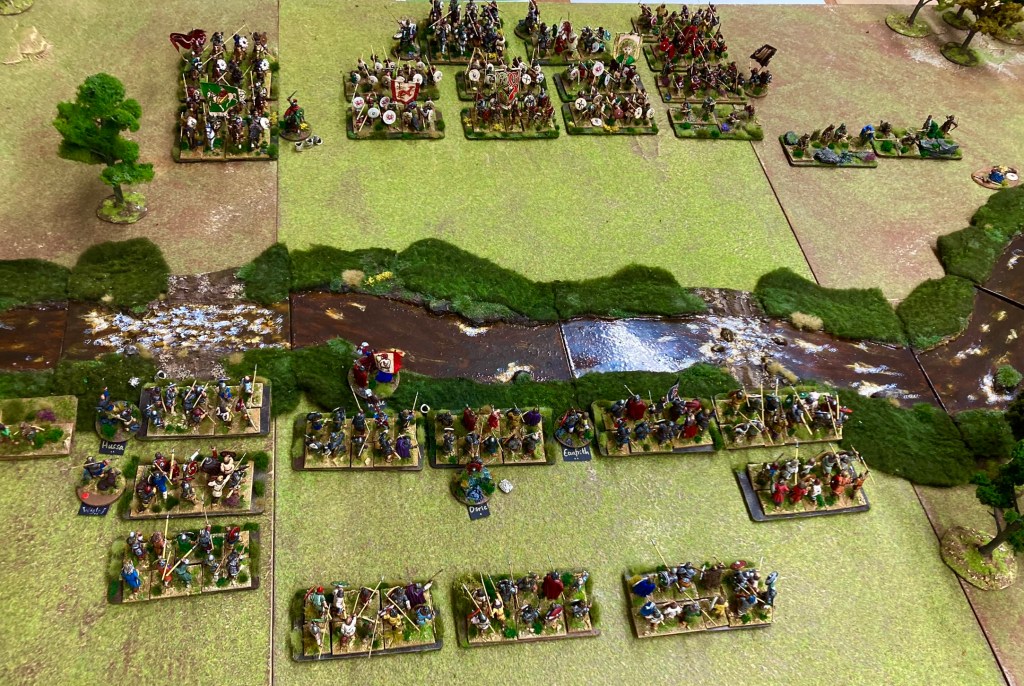
Anyway, back to the plot. Artos (Rick), determined to hold up the horde of West Saxons (me) about to pour into Dumnonia, sent Gwalchmai (AKA Gawain) down to the ford. He issued a challenge to single combat which Wiglaf (and his hound) was glad to take up, as turning it down would have meant a loss of Reputation.
With both Heroes succeeding at keeping their footing in the water, the combat went back and forth as Wiglaf first wounded Gwalchmai, then was wounded back in return. In the third and final round, however, my dice came up trumps and Gwalchmai ended up in the ford, ruining his day, his trousers and his fancy shield. The Saxon Force gave a great roar of victory and surged forwards towards the crossing.
Wiglaf nonchalantly finishes off Gwalchmai!
Unfortunately for Aelle, while the front of the Saxon line surged forwards, the back ranks were clearly feeling a bit reluctant and refused to obey orders despite repeated yelling and bawling from the Heroes!
The Saxon back ranks are in disorder despite the yells of their leaders
A round of dreadful Command Tests – and failed rerolls using the Heroes’ Mighty Deeds – left Aelle’s front line unsupported. The Britons, in contrast, had managed an orderly advance!
Here come the Britons! Rick picked up the movement rules very quickly
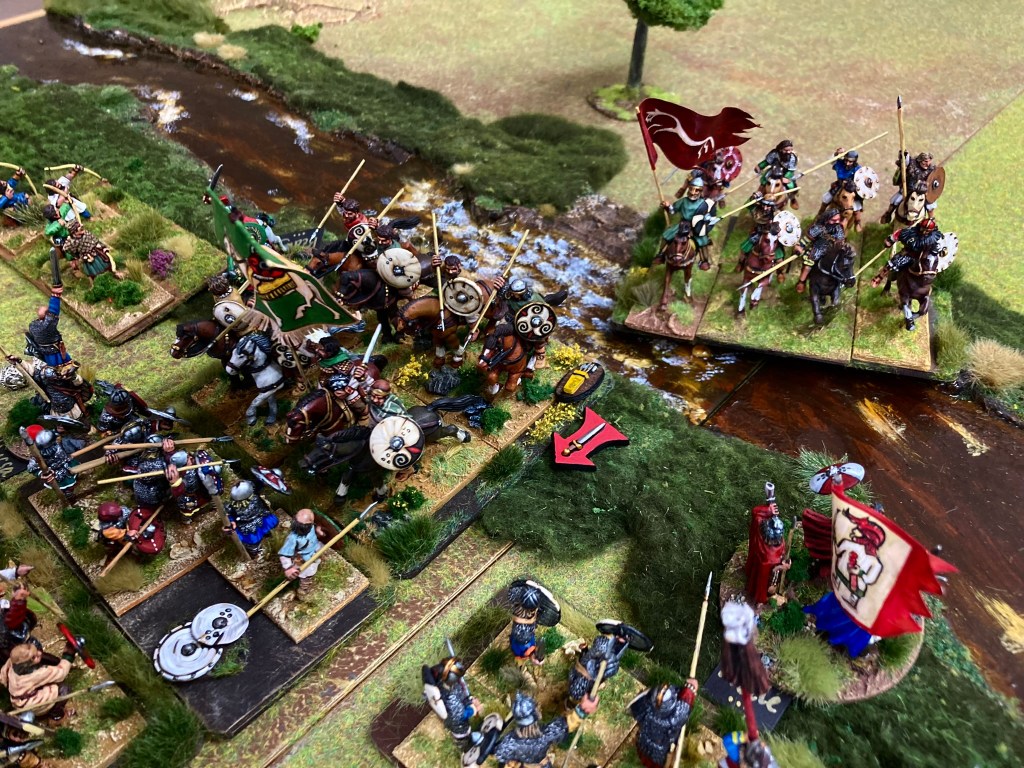
Seeing Hussa and his Saxons taking the left side of the ford, Rick did what any good Arthurian hero would have done and sent Artos’s warleader Bedwyr and his heavy cavalry smashing into the Saxon lines, hoping to break them before Aelle and the rest of the Saxons got their house in order. Reputation was duly gained (+1 for a Hero leading a charge and +1 for the first charge of the game – hurrah!), helping to make up for the loss of Gwalchmai in the single combat at the start.
Bedwyr deals death as his men boldly charge across the ford
I’d like to say that the battle for the ford was hard-fought, but Hussa and his Saxons turned in a desultory performance, inflicting no Stamina damage on the Britons while losing half of their own. Some superb ‘support saves’ from Rick meant that the cavalry Unit shrugged off a number of blows from the Saxons.
Bedwyr’s supporting Unit, having helped to win the combat, use their momentum to swing round and block Aelle and his Saxons
Worse, Saxon thegn Hussa was hit by a javelin in the melee and took a wound (this was me rolling 1 on my raven dice and sadly not for the last time in this game!)
Game on! The Britons are across the ford at the bottom, but the main scrap has yet to commence
With the combat won, Bedyr’s mounted comitatus pushed the Saxons out of the river. Using the momentum of their win in combat, the supporting Unit (with the red banner) swung round to cover off Aelle’s Saxon hearthguard who would otherwise have threatened the flank of Bedwyr’s men.
Are they in Spear Throw range? Aelle finds out
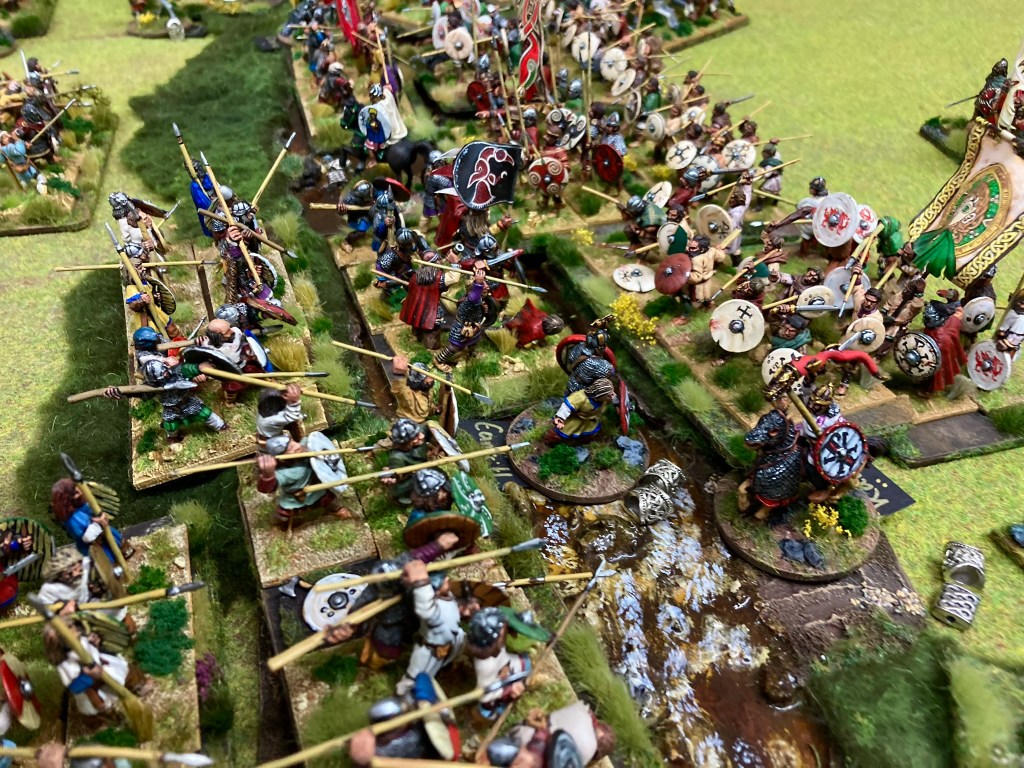
Reeling from the defeat on their left, it was time for Aelle to commit everything to battle. Along the length of the river, he issued the order to charge, and an enormous melee broke out in the knee-deep water. Many Reputation tokens were earned for this glorious deed, giving the Saxons a slight edge at this point in the battle.
CHAAAAAARGE!
On the Saxons’ left, Bedwyr’s gamble of an early charge was paying off. As the fighting continued, he broke Hussa’s Unit and forced the Saxon leader to choose discretion over valour as his men fell around him; Hussa chose to retire to the rear, but at the loss of a Reputation token as Bedwyr’s riders jeered him!
Hussa is wounded (bottom left) and retreats; (top right) Aelle’s impetuous charge is blunted by the British reserves
Bedwyr’s supporting Unit was now fully engaged with Aelle’s Saxon hearthguard who – with indifferent dice rolling – had to settle for pushing the British cavalry up the bank and on to Artos’ side of the river. This had almost immediate consequences as Rick had held back a third Unit of mounted companions as a rearguard. Seeing the potential crisis, they hurled their javelins and plunged in to join the melee.
Now it was action all along the ford, with Artos himself riding in and joining in the melee. Despite being in the thick of it, with both sides taking damage, Artos couldn’t roll a raven to save his life, passing all his Risk to Heroes tests. What a Hero!
In sharp contrast, Osric, another of the Saxon champions fighting in the ford, promptly rolled a 1 and found himself with a sword in his head. Ouch.
Kai is supported by skirmishers who cause some damage on the Saxon right
On the Saxon right, Artos’s foster brother Kai found himself face to face with his opposite number, Eanfrith. It would have been rude not to issue a challenge and Kai duly did so, dispatching the Saxon in two rounds.
I rolled on the Hero Death in Combat table, hoping for at least a glorious death, but found that Eanfrith had ended up as no more than ‘food for ravens’. Which is why he doesn’t get a mention in the Arthurian legends, I guess. 🙂
The fighting on the Saxon left continued, with the wounded Hussa and Wiglaf trying to shore up their flank. A change in fortunes finally saw the lead two British cavalry Units broken, but Bedwyr survived (albeit at the cost of a Reputation token) and Artos’s rearguard had held the line.
The last known photo of Aelle as he boldly plunges into the British cavalry (bottom centre)
Unfortunately for him, Aelle paid the price for pushing so deep into the British lines. Having little support, he was wounded and then killed by Artos’s cavalry, leading to a catastrophic loss of Reputation (four tokens out of the goblet). The battery on my iphone took a sudden nose dive at this point as well, so I’m afraid our chronicler was forced to use stock pictures to illustrate the rest of the report.
Not a great day for Saxon leadership! Minis by Tantatus, Gripping Beast and Foundry in front of a Jon Hodgson backdrop
Although the Britons had been damaged by the loss of two of the noble cavalry Units (three Reputation points apiece), the gains resulting from Kai and Artos’s heroics managed to shore up the Reputation of the Britons. The Saxons were now almost leaderless; although they were inflicting casualties upon the British Units, several of which were on the verge of breaking, the momentum was with Artos and his warriors.
One, two, three…retreat!
The final turn saw the critical damage done, with the Saxons losing the wounded Hussa and another Unit, emptying their goblet of Reputation. With no Heroes left in position to lead a charge, the Saxons were broken and fled, leaving the Red Ford filled with their dead. Artos and his Heroes had defended Dumnonia once again, the great warleader having an apparently charmed life in the midst of battle. The bards would sing of this for a long time.
Winning in Dumnonia! Artos and his team
It had been a thoroughly enjoyable game, with Rick being ever the genial host and gaining the favour of the Gods in his dice rolling as a result! (Apparently this is not a normal occurrence – the dice rolling, not the geniality). It was a massive privilege to be able to demonstrate my game to someone who has been a major influence on the wargames scene and my gaming in particular.
I was especially pleased that Rick enjoyed the game and commented favourably on the rules, in particular the ‘support saves’ mechanism. We had a chuckle about nothing really being original in wargames rules, but I hope that MidgardHeroic Battlesmanages to assemble them to create something new. Unsurprisingly for someone who read The Iliad in his youth, Rick picked up the heroic ethos very quickly and got stuck straight into the game with a winning combination of single combats, heroic charges and sound tactics.
The only surviving Saxon leader, Wiglaf
My thanks again to Rick for his hospitality and hosting the game. Anyone seen that soothsayer though? The Saxons would like a word!









































 mogsymakes