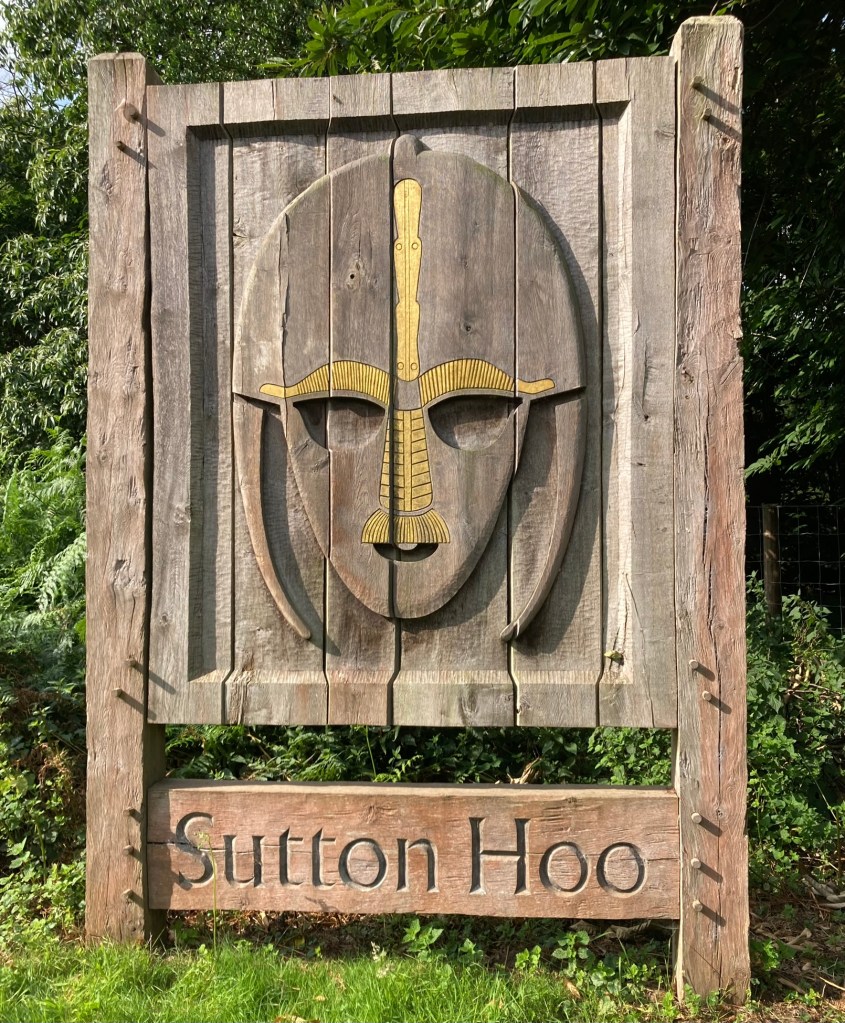
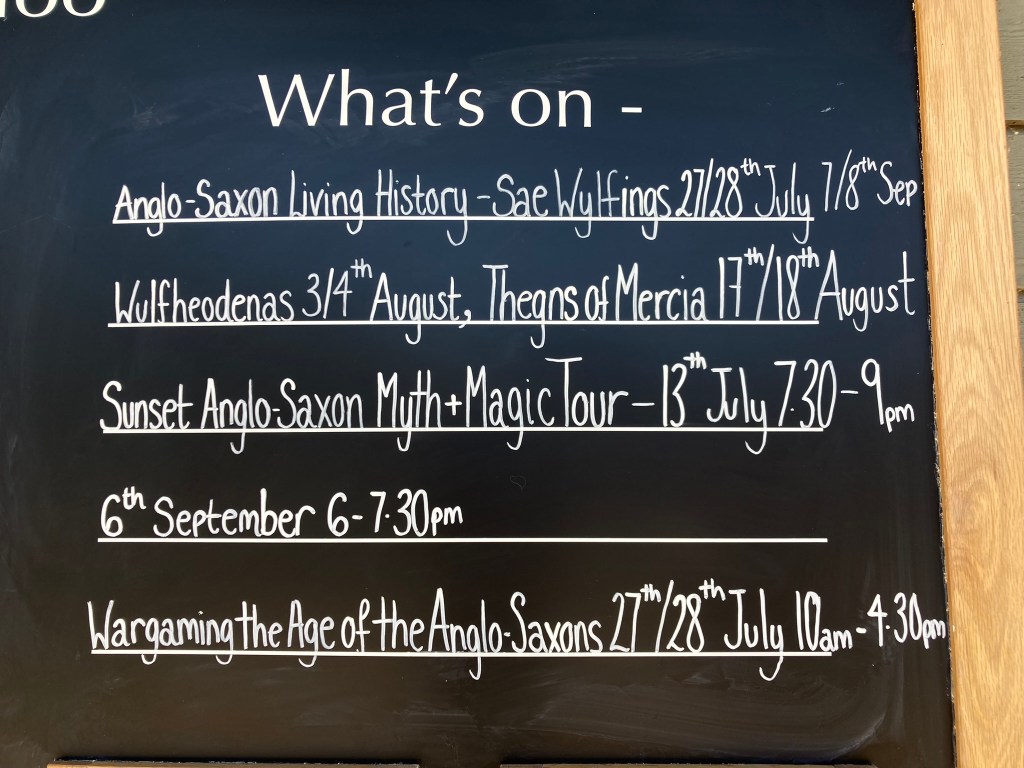
Following on from last year’s experiment with a one-day format, this year the Sutton Hoo team expanded the Wargaming the Age of the Anglo-Saxons event into a two-day event.
Having personally toured Sutton Hoo during the excavations in the 1990s, it has to be said that the National Trust have done an amazing job of presenting this site to the public and creating the facilities needed for a family day out. We were delighted to be invited back to help out with this event (and huge thanks to Tom, Pete and Oz who joined me in this quest!)
The brief was the same as last year – to provide and run engaging miniature wargames set in the 7th century for the visiting public. Andy’s recommendation was to have a team of four people to run each game, which was absolutely necessary under the circumstances, as we were busier than pretty much any wargames show I have been to!
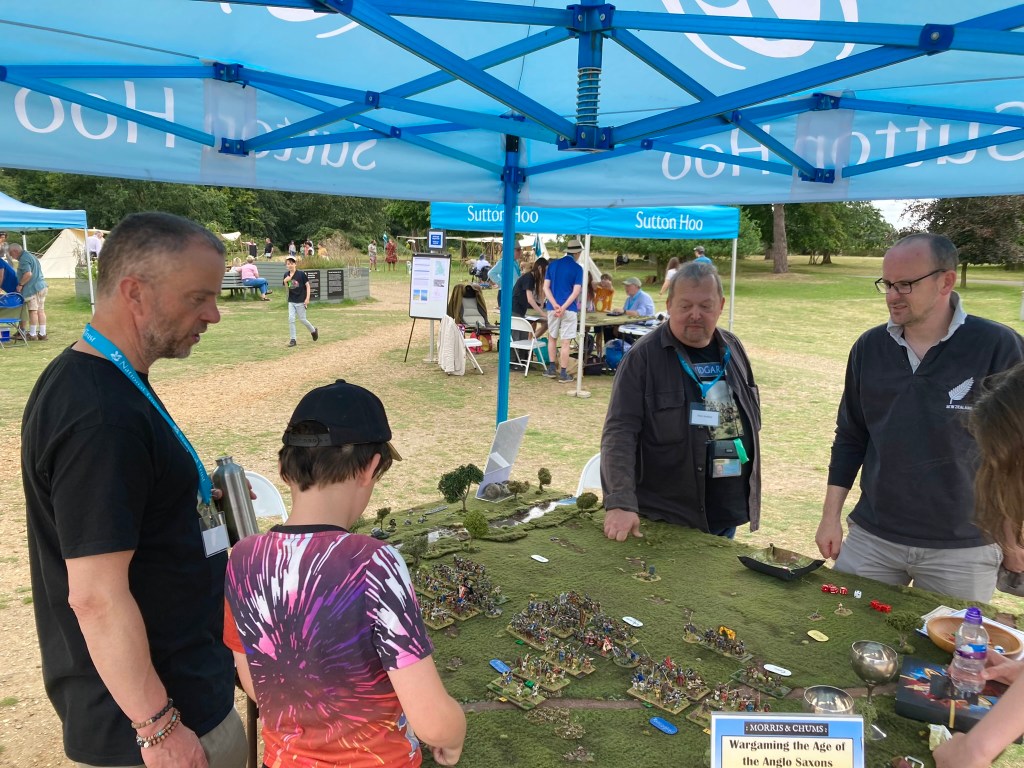
Rules had to be fast-playing and quick to explain, so once again we went for my own Mead-Price rules (available here as a free download) which allow an early medieval battle to be played out in around 20-30 minutes.
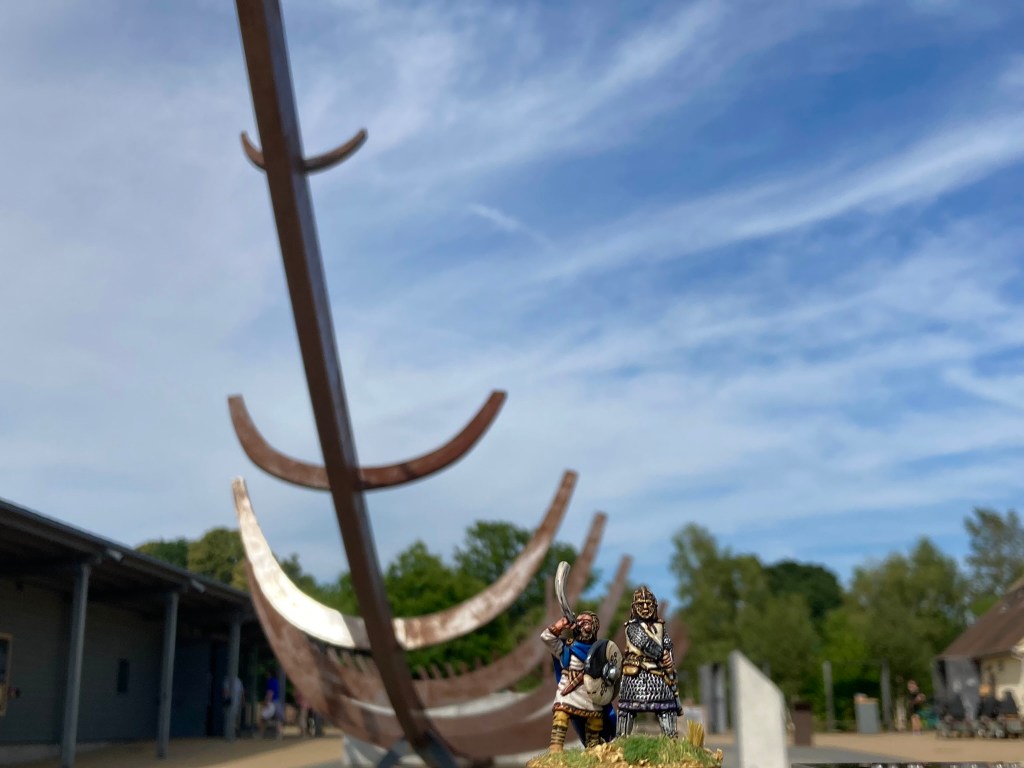
There were three games available alongside the ever-popular painting table (‘Paint your own Saxon thegn’) which I’ll talk more about in Part 2.
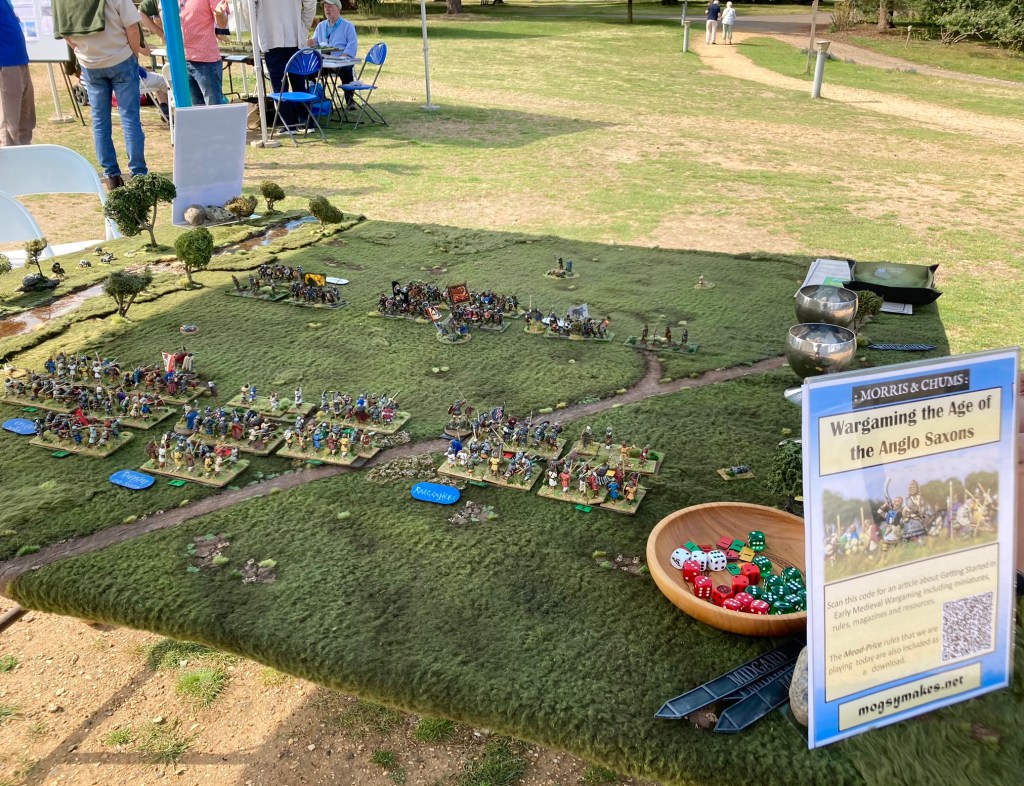
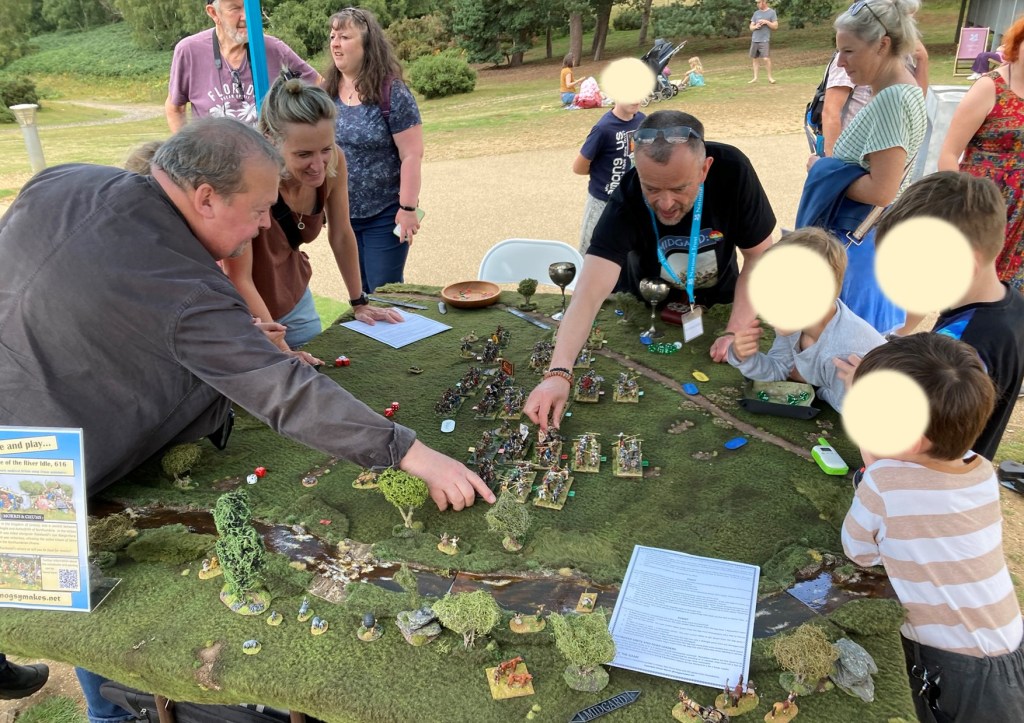
We (Morris & Chums/ Mogsymakes) were reprising our Battle of the River Idle 616 game from last year. Being the only battle that we know that Raedwald – King of East Anglia and the most likely candidate for being the occupant of Mound 1’s ship burial at Sutton Hoo – fought in, it was the obvious choice.
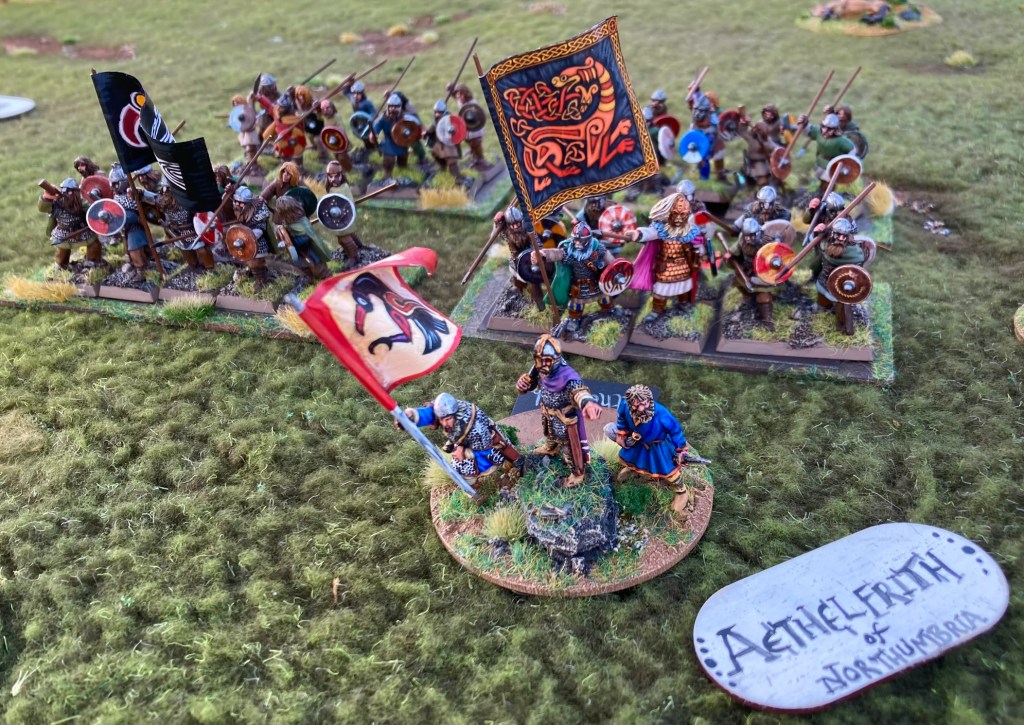
Although details on the actual fighting are sparse, the build-up to the battle is fascinating and always helps to set the scene for our visitors. Aethelfrith of Northumbria was probably the most feared ruler of his day; Edwin of Deira, his rival, had fled the north and taken refuge in the court of Raedwald of East Anglia. Aethelfrith attempted to pay Raedwald to have Edwin killed, but instead, Raedwald (with persuasion from his wife*) decided to take an army north and fight it out with Aethelfrith.
*Edited 6.8.24 in response to Bruce’s comment below – thanks, Bruce!
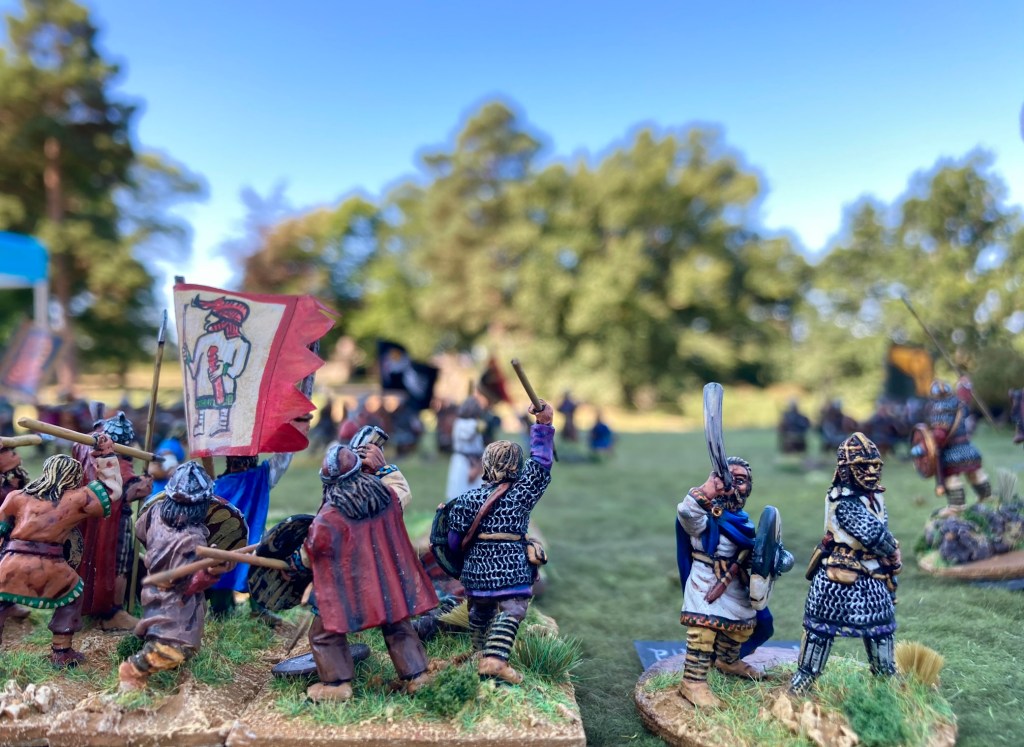
The two forces met on the banks of the River Idle in Lindsey (Lincolnshire) and Aethelfrith – with a smaller army – was defeated and killed. However, the victory was clearly hard-fought, as Raedwald’s son Raegenhere also died, The victorious East Anglian king returned home to bury his son (Raegenhere has been suggested as a possible occupant of Mound 2 at Sutton Hoo, the second ship burial), while Edwin of Deira was now installed as King of Northumbria.
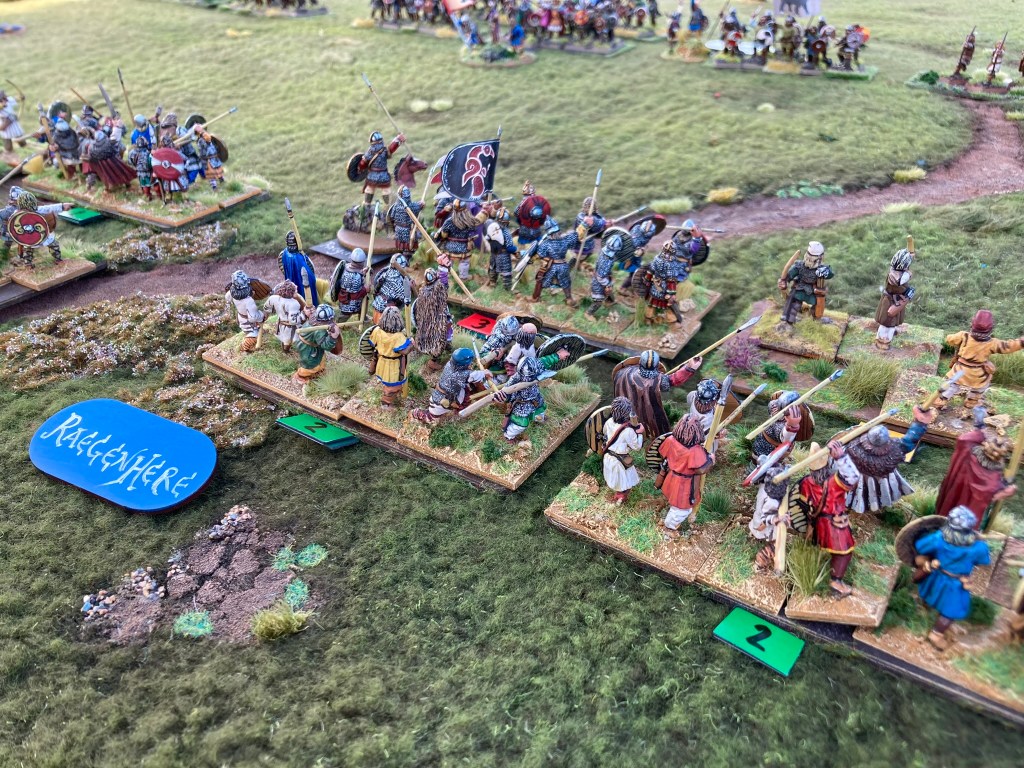
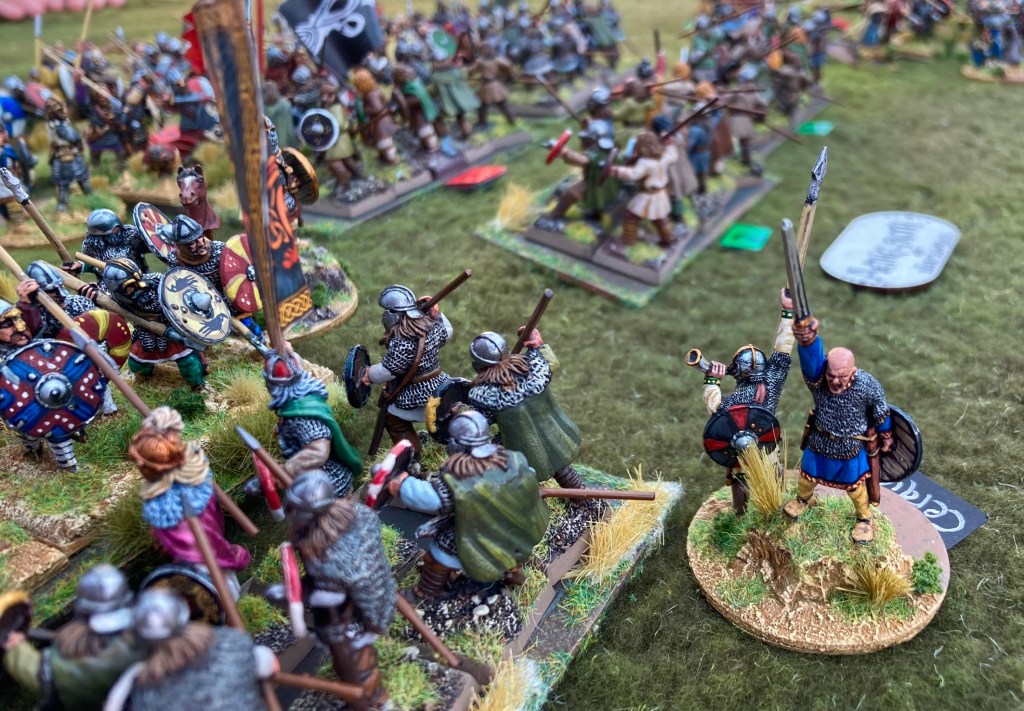
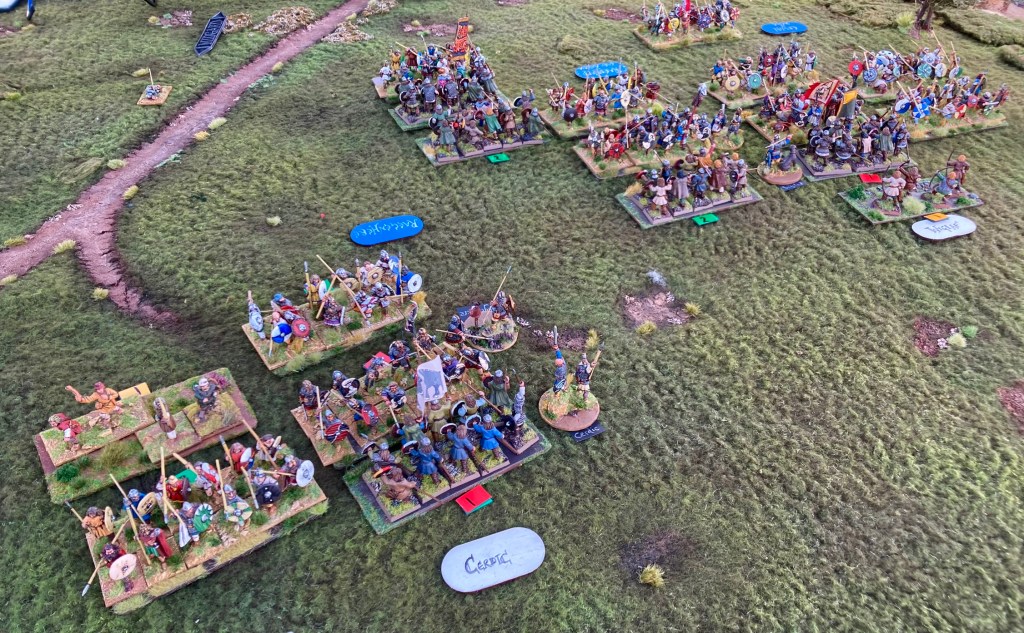
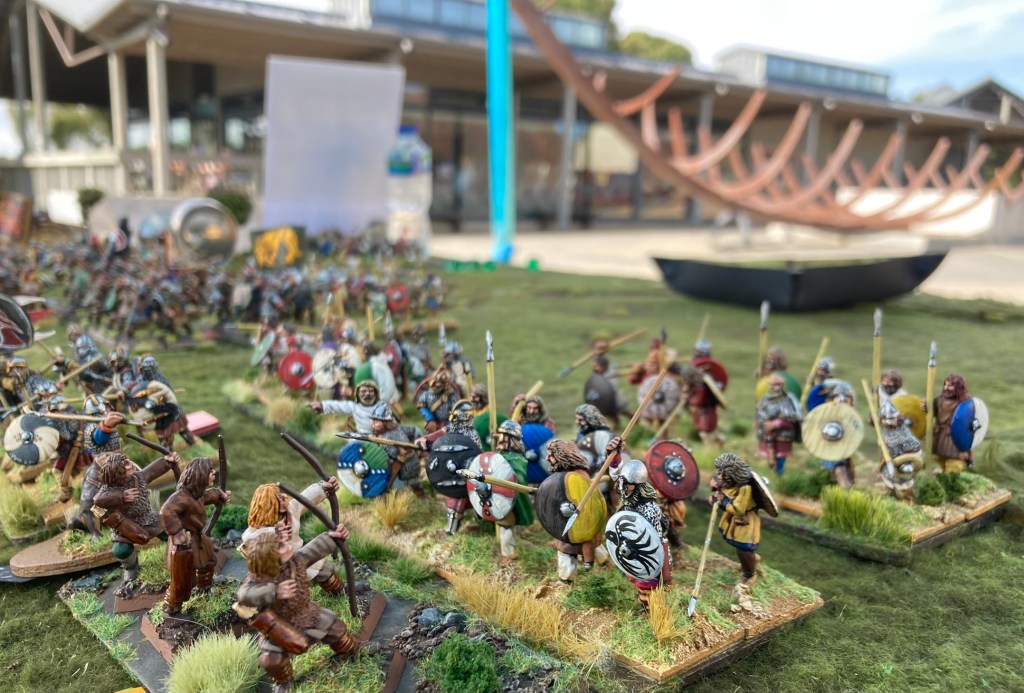
Our game divided each army into three commands, with Edwin (left), Raedwald (centre) and Raegenhere (right) in charge of the East Anglians. Each had an individual unit of hearthguard (marked with red tokens in the game). The Northumbrians were under the command of King Aethelfrith (centre), with the fictitious thegns Cerdic (left) and Wiglaf (right) on his flanks.
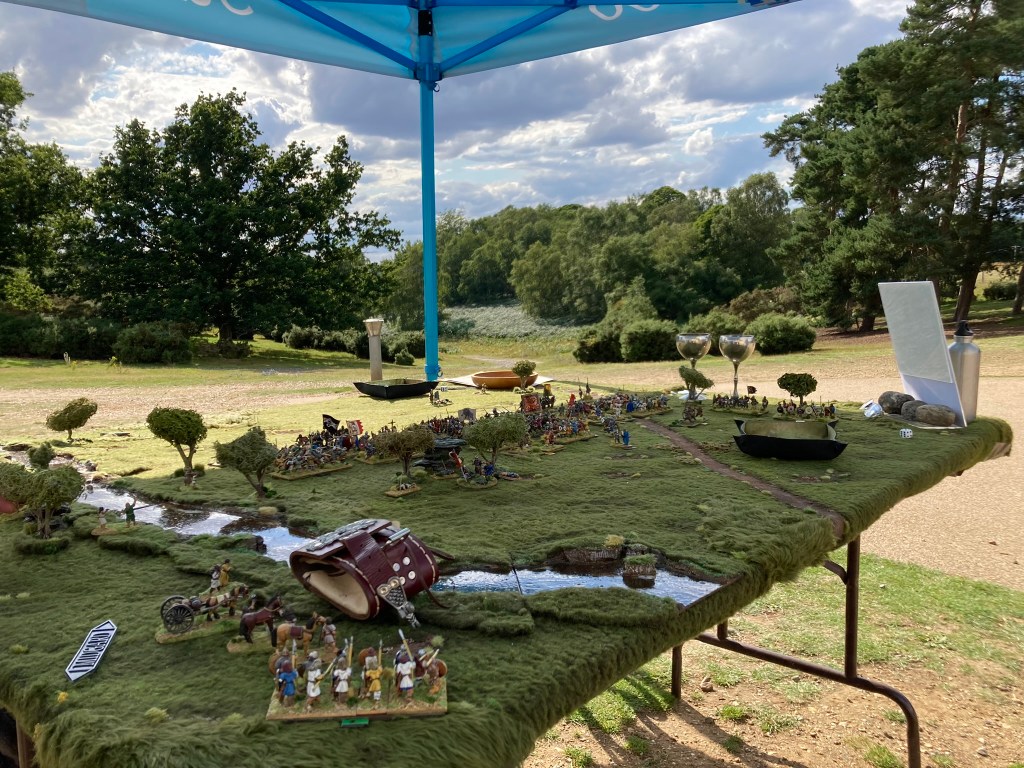
Following suggestions that Aethelfrith’s army was smaller than that of the East Anglians, we allocated him less troops, but allowed him four hearthguard units to represent the veteran warriors from his numerous campaigns.
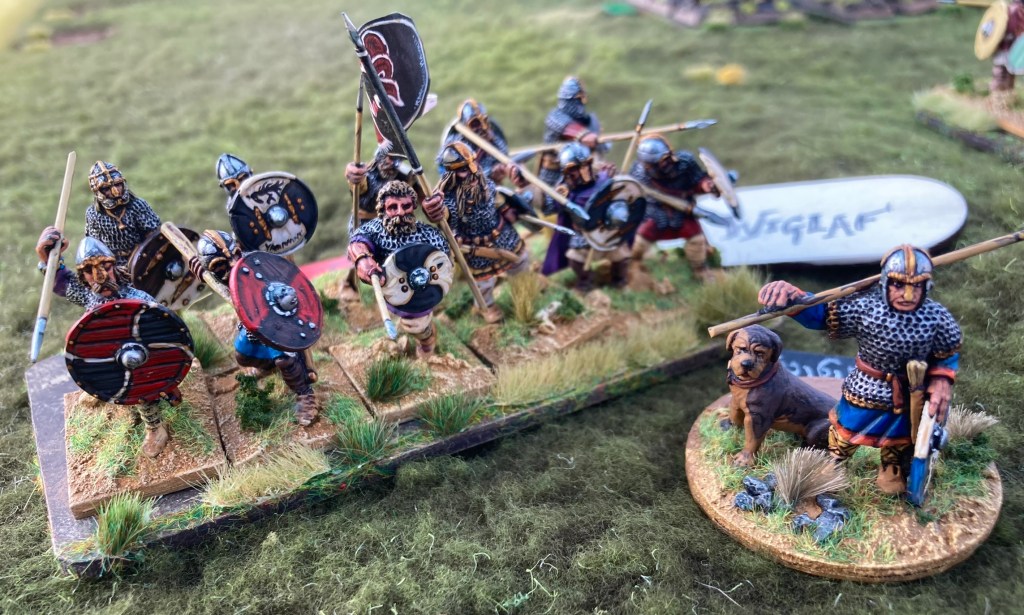
This created a scenario which was more nuanced than you might expect for an early medieval battle, whereby Aethelfrith was on the back foot but could achieve victory with a strong central attack. Luck was ever-present, especially in the survival of the commanders – the biggest shouts of the day were reserved for players rolling the feared ‘Raven Dice’ and finding that their hero had fallen.
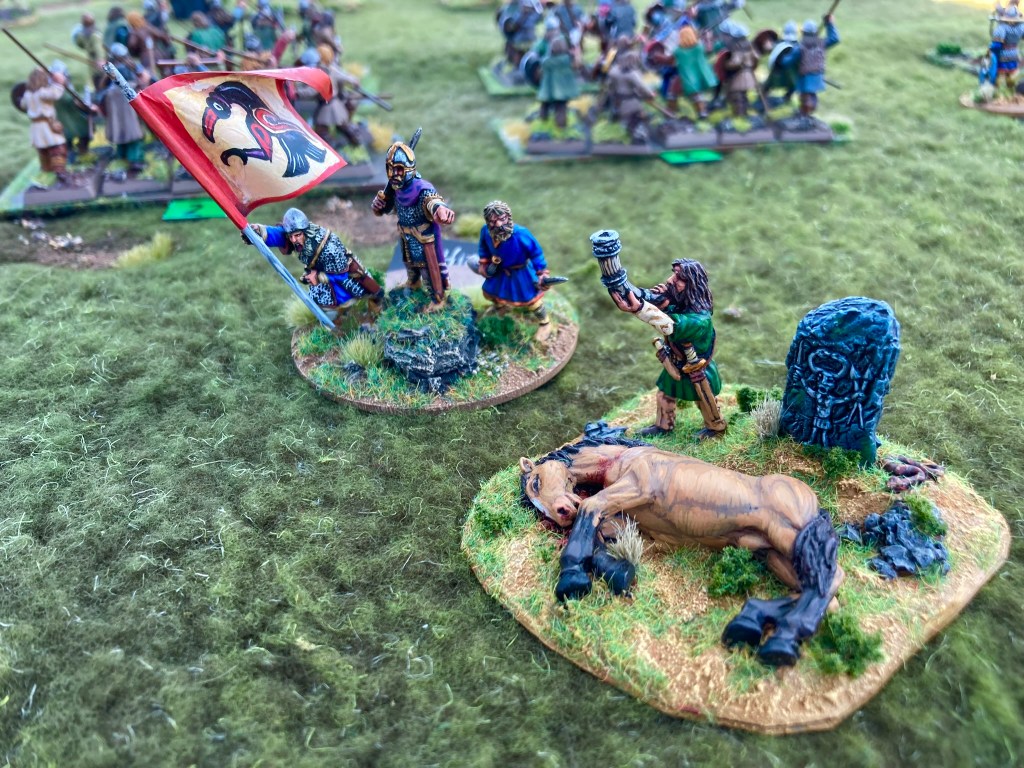
Within 15 minutes of the site opening, we were running our first game and were then busy until closing time. One game would finish with a group waiting to play the next one as soon as we had re-set and some families came back and played multiple battles! As well as interested visitors, we also had a number of experienced wargamers and their families dropping in which was wonderful to see.
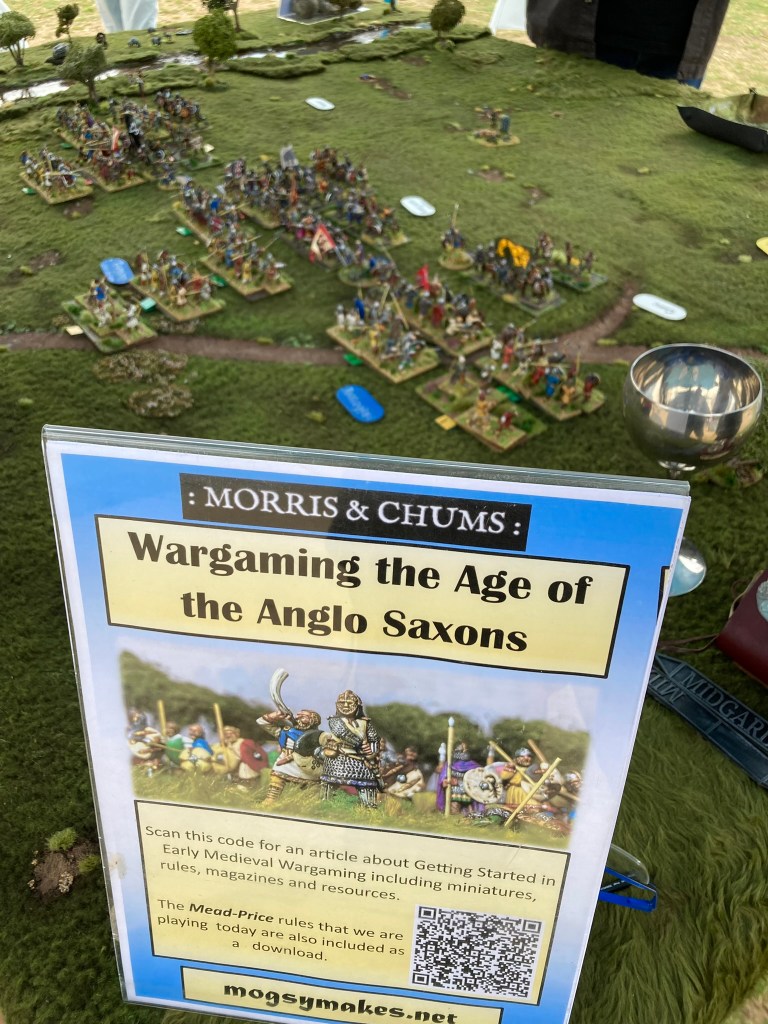
We ran 11 games on the Saturday and a similar number on the Sunday, so well over 20 overall, the most that we have ever run a single wargames scenario! On the Saturday, the East Anglians had an 8-3 advantage over the Northumbrians, but this evened out to around 50/50 in Sunday’s battles.
I was especially pleased with how the visitors took on board the wargame as a narrative, with history being both re-created and re-written. Sometimes we had an exactly historical result, with Raegenhere dying but Raedwald being victorious; in others, we had a reversal, with Edwin being struck down by an arrow in the early stages of the battle, thereby changing the entire history of Northumbria! In one particularly memorable game, all three of the East Anglian commanders were slain and their army destroyed, which might have completely changed the face of Sutton Hoo.
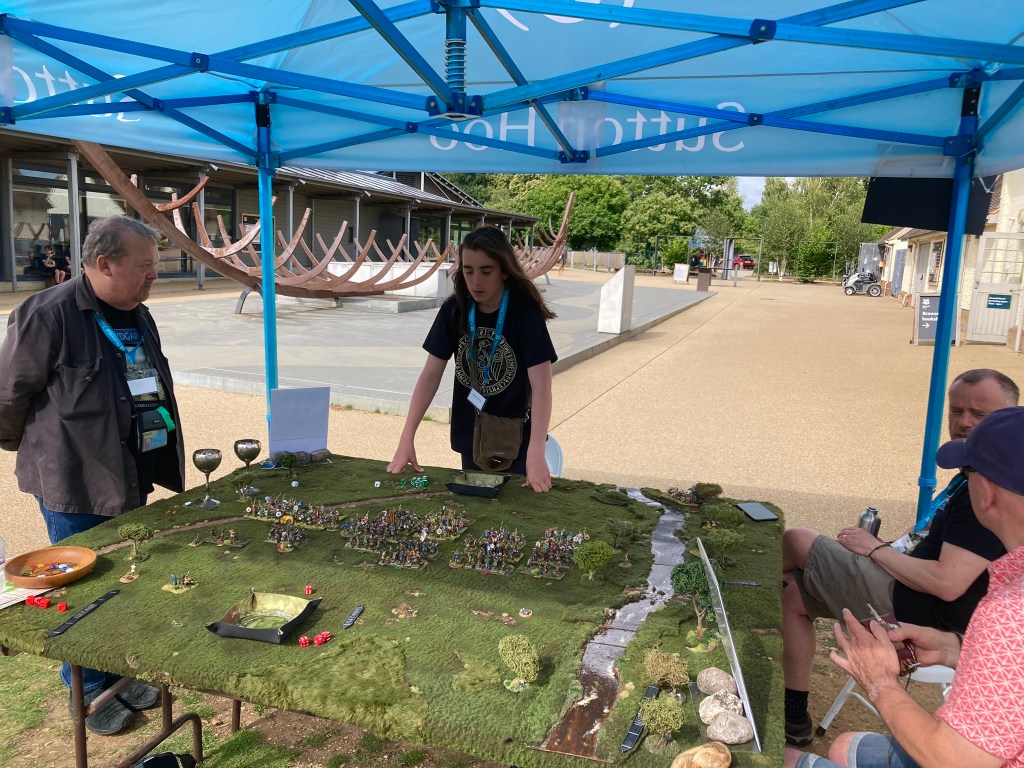
We had a number of repeat visitors from last year which was wonderful to see. One parent reported that, on the back of the event, they had ordered some miniatures for their children, which was lovely feedback.
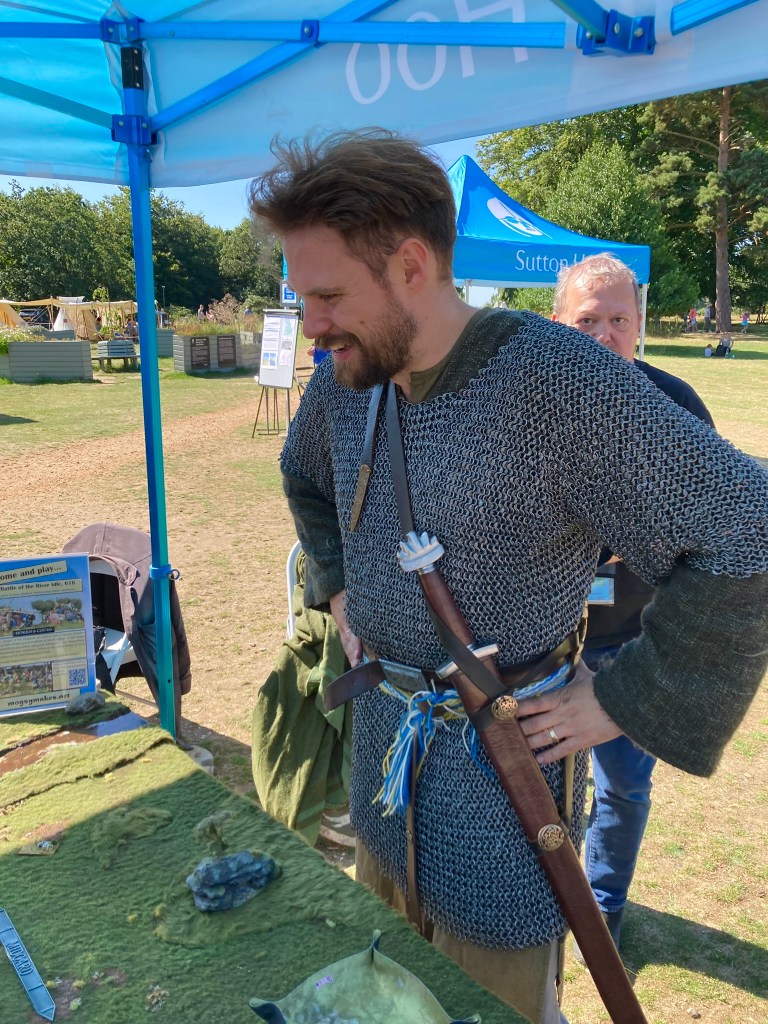
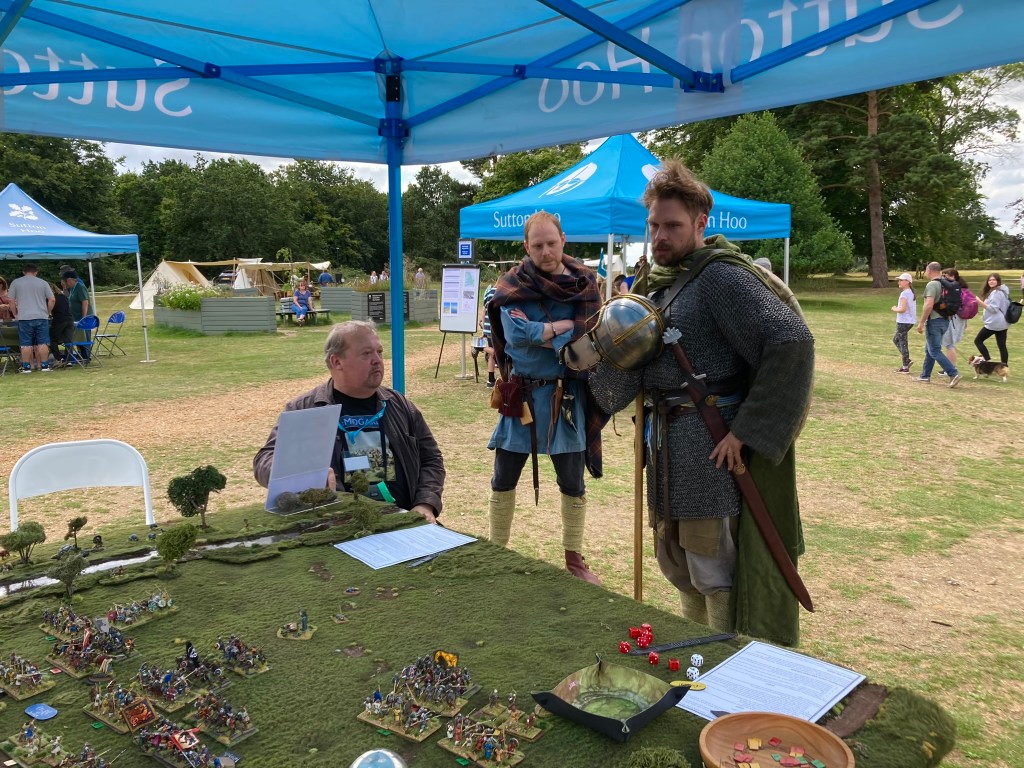
One change to the event from last year was that the Saxon re-enactment groups had been pitched directly next to the gaming area, which was perfect in terms of interaction. A number of re-enactors dropped by to enhance our games and even to play. Harry and Paul of Ormsgard booked in a game early on Sunday morning, for which Harry gamely wore his full kit depicting a Northumbrian warrior of the 7th-8th century.

Part 2 of the report will cover the other games and some more about the site.
In case you’ve not seen it, you can find my article Getting Started In Early Medieval Wargaming here.
 mogsymakes
Hi James, Congratulations to you and the lads for putting on another fantastic advert for Dark Ages wargaming at Sutton Hoo. It’s always inspirational seeing your minis and terrain and it sounds like you all put in one hell of a shift. Hope you’ve all recovered. I am mocking myself for my own pedantry (inwardly groaning), but it’s in reference to the line that Raedwald’s unnamed queen was Christian. Bede, when discussing King Eorpwald’s baptism, says: “His father Raedwald had in fact a long time before this received Christian baptism in Kent, but to no good purpose; for on his return home his wife and certain perverse advisors persuaded him to apostatise from the true Faith.”(Ecclesiastical History of the English People, Book II, Chapter 15) Bede says the reason the queen persuades Raedwald not kill Edwin is because, “…it was unworthy in a great king to sell his best friend for gold, and worse still to sacrifice his royal honour, the most valuable of all possessions, for love of money.”(Book II, Chapter 12) How true any of this is is anyone’s guess. Bede clearly doesn’t like Raedwald very much, and it may just be tittle tattle. I think, though, it may also give us a glimpse at what was expected of a pre-Christian king – fierce loyalty, a ring giver not a gold hoarder, all that good stuff. Maybe? Sorry. I hope that hasn’t come across as too pedantic (pity the fool who asks me anything about the early middle ages at a party – l will bore them to literal tears). I thought you may like to know, though. Looking forward to Part 2. Again, I’m in awe of your Dark Ages collection. It’s my favourite part of your blog. Best wishes Bruce/Old Hob Sent from Yahoo Mail for iPhone
LikeLiked by 1 person
Hi Bruce, many thanks for the compliments. It’s a unique event to be part of and we thoroughly enjoy it despite the long drive and relentless pace!
I’ll confess that I didn’t have my copy of Bede handy when doing the write-up! Thank you for your detailed notes – I’ve edited the article accordingly. Not shopping your friends could be seen as a Christian sentiment but most certainly also as a breach of the code of hospitality, though at least 30 pieces of silver was clearly on offer. This transitional period of pagan-Christian worship amongst the Anglo-Saxons is fascinating and, I think, is especially visible in the Mound 1 ship burial.
LikeLike
Well done guys for some positive advertising for the hobby and interest in early medieval english history.
LikeLiked by 2 people
Thank you! It’s a great event to run games at.
LikeLiked by 1 person
well done!
you’re doing God’s work
LikeLike
Beautiful figures and great set of fast-play rules, and great to see you spreading the gospel of wargaming to regular people. Not sure if I’ll ever get to Sutton Hoo (being an American), but it seems pretty cool.
LikeLiked by 1 person
Cheers! Worth a visit should you ever find yourself over here. I’m always interested to see wargaming combined with historic sites.
LikeLiked by 1 person