At its core, Midgard Heroic Battles is a rules set that reflects ancient and early medieval combat with heroic leadership, and can be played as such on a ‘historical’ level. However, it has been deliberately designed to also work for legendary and mythical settings, with the option to dial the fantastical elements up – or down – as you wish. How does this work? Let’s have a look.
Historical Forces

At the historical level, you can simply pitch a pair of, say, 9th century Viking and Anglo-Saxon English armies against each other. Units would be mostly Warriors with Armour 3 and Armour 4 for the best-equipped hearthguards; a few Skirmishers with javelins, bows or slings; and probably commanded by a Level 3 Major Hero with some Minor Heroes (Level 2) and Champions (Level 1) in support. Traits (the special rules given to Units and Heroes) would also be selected to fit this historical setting, with the hearthguard perhaps having Spears as Tribute and Steadfast, which confer combat and morale advantages. Conversely, a shaky Unit of fyrdmen might have the Brittle Trait, making them more likely to flee the field in adverse circumstances. Heroes could select Traits such as Battle-Smiter (giving an advantage in single combats) or Hold Fast! (which can rally a damaged Unit).
Legendary Forces
Moving into legendary territory, we can add some extra Unit and Hero types. Perhaps the Viking king has a bodyguard of bear- or wolfskin-clad berserkers with the Relentless Trait, meaning that they will never retreat and will always pursue a defeated enemy.
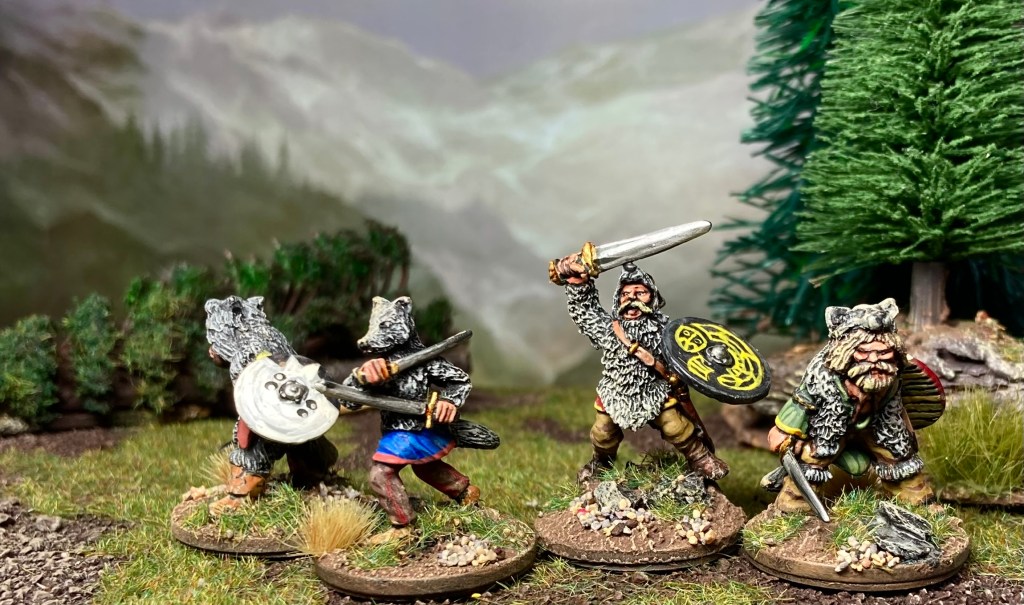
A Hero could be armed with a Legendary Weapon, an heirloom that deals death by cutting through the enemy’s armour. Other Heroes could be fielded as soothsayers or priests, being able to use the Omens Trait to predict the future or I Foretell Mighty Deeds to inspire other Heroes to great feats of battle.
Fantasy/ Mythological Forces
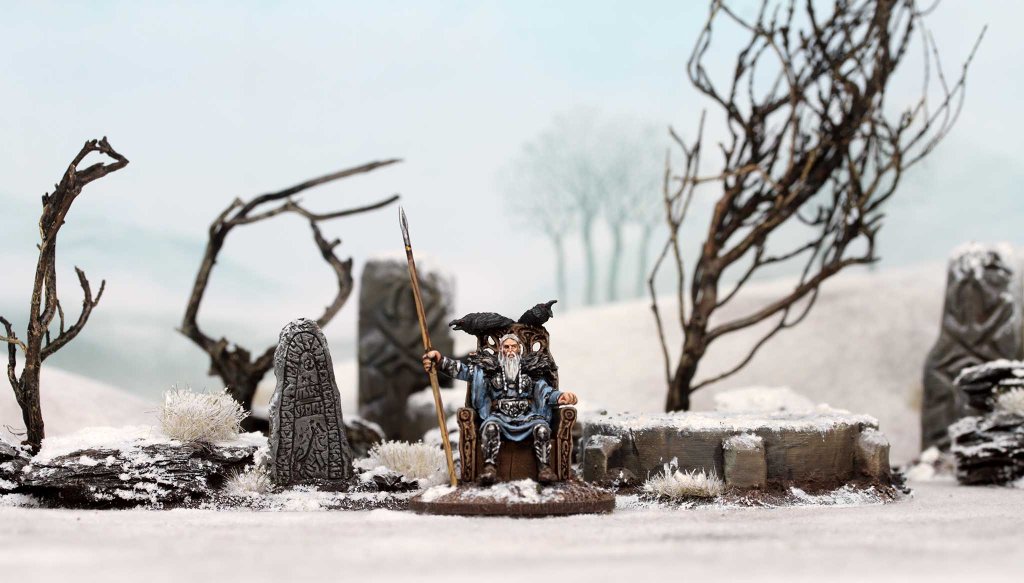
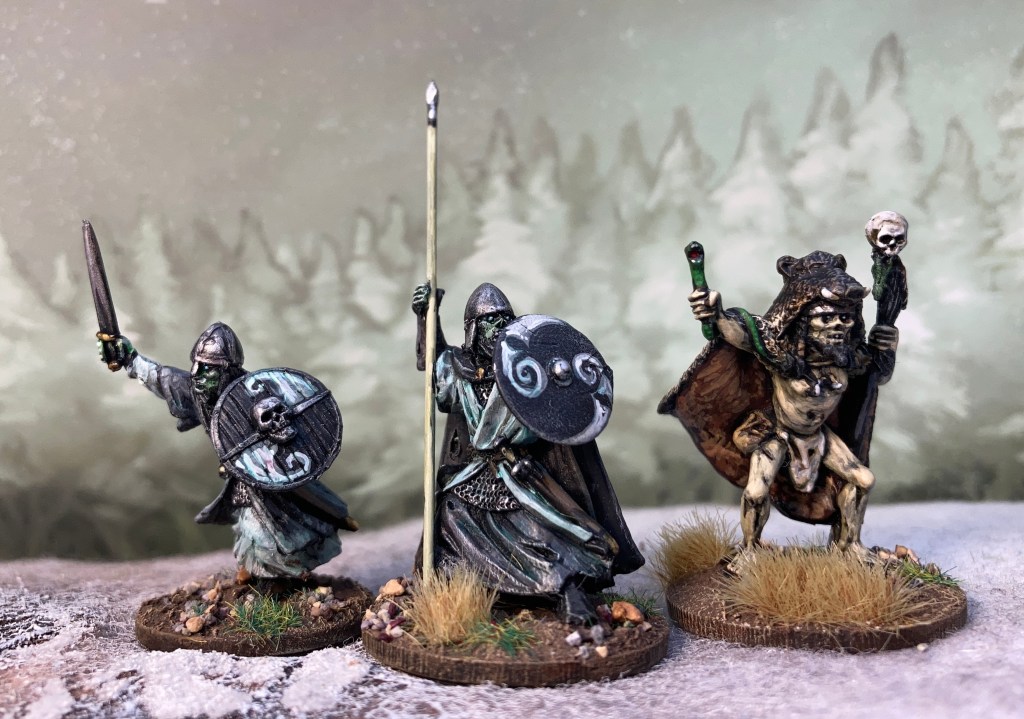
Taking a further step into fantasy, we can open up the rich vault of mythology and folklore. Heroes of Level 2 or above can be given the Sorcery Trait, allowing them to cast spells during the battle – suitable for both pagan and Christian alike. Gods such as Odin could make an appearance on the battlefield, fielded as Level 4 Legendary Heroes. Maybe the Norse Force includes a Contingent of Draugr (undead warriors), Frost giants or Alfar.

And perhaps the English have brought one of their great giants (Gog or Magog?) back from the past, fielding it as a Monstrosity Unit, able to hurl boulders and crush the Norse underfoot?

It’s up to you how far you dial up the legendary and fantasy elements – but bear in mind to keep them to fit your game setting. Midgard is intended as a narrative game where everyone has fun by participating in the scenario, rather than two ‘min-maxed’ unrelated Forces crushing each other. There are twelve example Force lists included in the rulebook, along with an appendix with all the information needed to design your own Forces. Future campaign supplements will include suggested paired Forces to enjoy a narrative battle experience.
Three Ways to create Fantastical Elements
1: Profiles and Traits
The simplest way to add legendary and fantasy elements into a Midgard Force is by adjusting Unit and Hero profiles, all of which is included in the Force Creator appendix of the rule book. An unusually tough (or possibly magically-protected) Unit could have its Armour value increased to 4, something that is usually reserved for the best troops.

Traits can be added on to Units and Heroes, such as Amphibious (useful for mythical creatures such as Fomorians and Mermen), Fearsome (does what it says on the tin) and Brutal (a powerful Trait reserved for giants, trolls and the like, allowing them to crush enemies in combat).

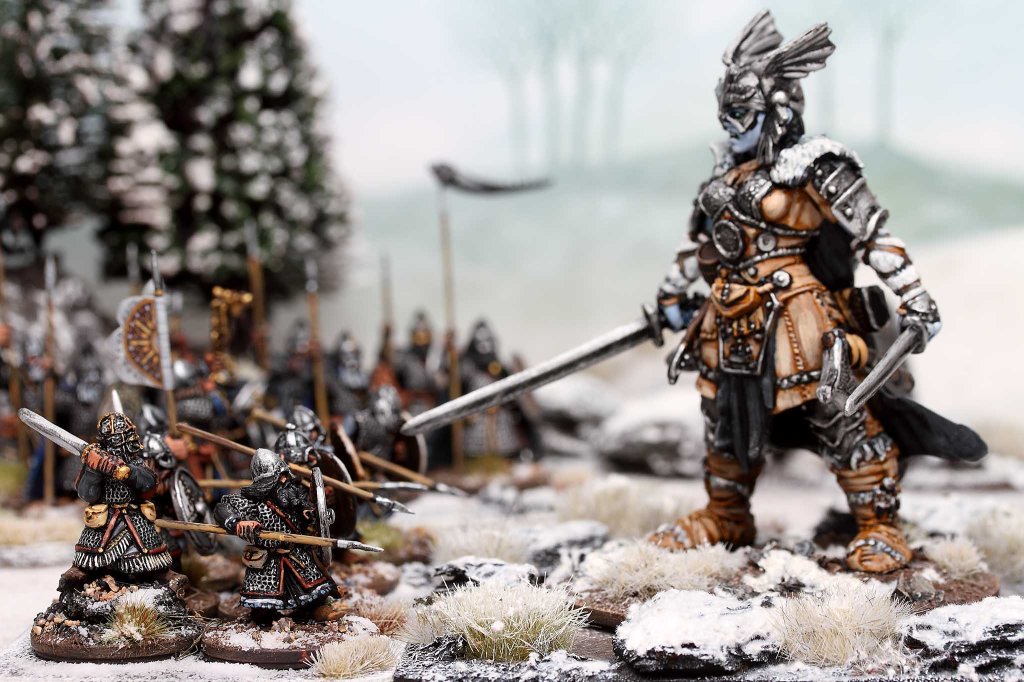
A fantasy or mythological Force is also likely to make more use of Monstrosities, the fifth Unit type. In a historical Force, Monstrosities will be limited to elephants and artillery pieces – if they are present at all. However, the fantasy player can dig in to an array of giants, dragons and winged beasts, some of which have the option to take Armour value 5 (the highest in the game) and have Traits such as Towering (a bonus in combat but also makes you an easier target for shooting). However, Monstrosities also have the disadvantage of being Aloof, meaning that they are harder to control, and their power comes at a cost – with a high points value, their loss is a big dent in the goblet of Reputation: definitely a double-edged sword!
2: Flying Troops
An obvious fantasy or mythological option in the Force Creator is the Flying Trait. This can be given to Heroes and certain Units and is dealt with in its own chapter within the rulebook, as it does add an additional layer of complexity to the game, and is best tackled once you’ve got the hang of the basic ground combat mechanisms. As Midgard is primarily intended as a ground combat game, flying troops are also limited within the Force Creator – we have used them for a few Units of harpies in Greek myth, a single dragon in a fantasy army or a Nazgul on winged beast in Lord of the Rings games.
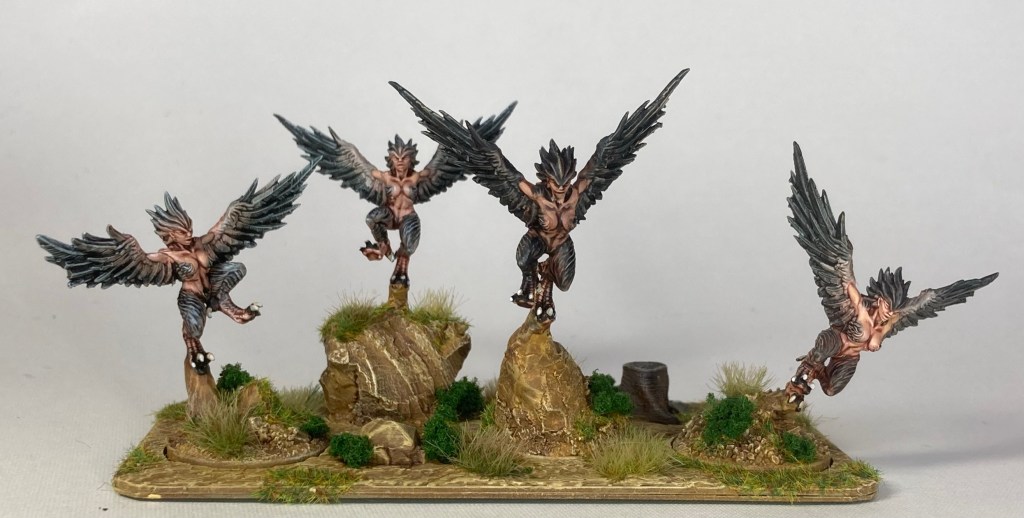
Airborne flying troops are assumed to operate at a low level above the battlefield and, while they are very fast-moving, can also be a bit flighty (pun intended) and can sometimes leave as quickly as they have arrived!

3: Sorcery

The final Trait that gets its own chapter is Sorcery. This can only be selected by Heroes of Level 2, 3 or 4, and spells may then be chosen up to that level for additional points cost; they are then cast using Mighty Deeds during the game. All 14 spells included have some basis in legend or myth (Wall of Mist and Weakness, for example, fit nicely within Celtic and Arthurian games) though Magic Missile – a name unashamedly borrowed from Dungeons & Dragons – can be used to represent a variety of sorcerous ranged attacks (fireballs, a lightning bolt or a blast of plague – the choice is yours). It’s worth pointing out that, although individual spells can be powerful, they are a battle-enhancer rather than a battle-winner; victory comes through destroying your enemy’s Reputation, not through sorcery itself.

 mogsymakes